
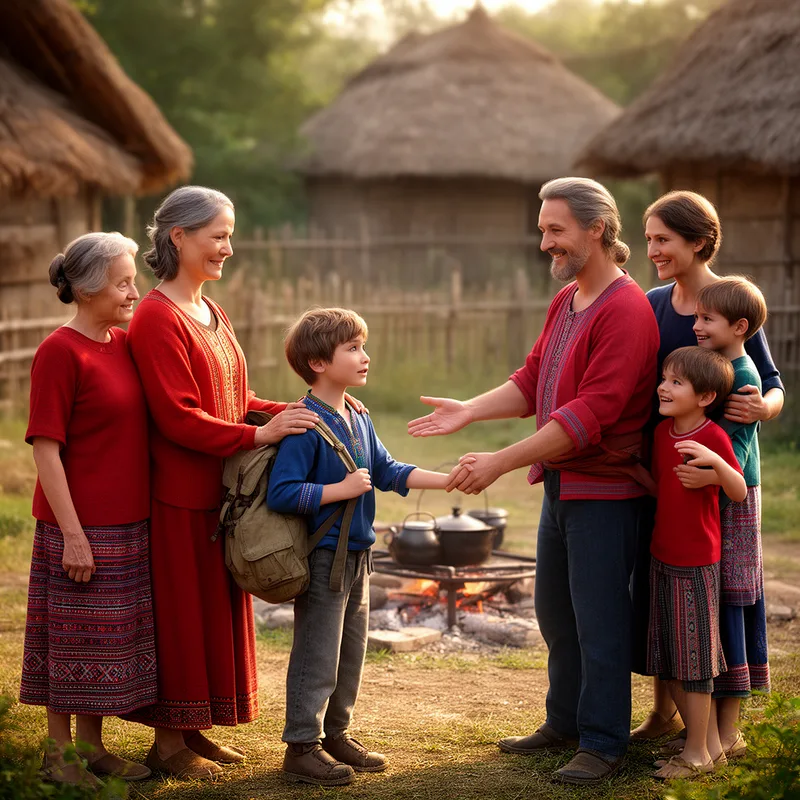
fosterage


 1
7.2
1
7.2
- noun
- /ˈfɔstərɪdʒ/
- UK
- "I, myself, took Arthur from between his mother and the wall when he was not two hours old, and brought him here to your father for fosterage.
Examples
-
As inheritance gradually changed, though, the prevalence of fosterage, especially among elite Baganda, continued well into the 1950s and meant that young people regularly spent months or years living with grandparents or an older aunt (usually father's sister, ssenga) or uncle (father's brother).
Academic text (2005) -
Any other man's child would be put out to fosterage, but Reynarth's child would be wanted nowhere in the two kingdoms his father had helped to damage so badly.
Fiction book (1992) -
I was at home, a better home than fosterage, and there were no good reasons for me to leave.
Fiction book (1990) -
Later, we discovered our common past and adventures; his father and my fosterage.
Fiction book (1990) -
Some of these children were their own, but young Christian wives were later encouraged by the missions to engage in a form of fosterage.
Academic text (2000) -
My mother had cashed the checks but never paid for my fosterage.
Fiction book (1990) -
Whatever the motives, many West Africans regard fosterage as a perfectly acceptable means of raising children.
Academic text (2002) -
I mentioned the cinder block chapel, my time in fosterage, our religious songs and labors, but not the glorious breasts we waited to see at the construction site.
Fiction book (1990) -
The person who rejects Sikaiana society may do so by not maintaining kinship ties, refusing to participate in fosterage, not participating in Sikaiana activities, marrying a person from a different ethnic group, and moving to another part of the Solomon Islands.
Academic text (1994) -
Many families in the community practice fosterage to provide children with a nurturing environment.
Synonyms
 78
3.2
78
3.2
The care, teaching, and values a child gets from parents
 77
2.6
77
2.6
Temporary care in another home for children who cannot live with their parents
 18
3.5
18
3.5
Caring for a child and teaching them how to behave
 17
3.2
17
3.2
Care for children or young animals
 11
2.5
11
2.5
The care and teaching of a child as they grow
 2
3.5
2
3.5
Care and encouragement for a child to help them grow

To help people, ideas, or projects grow
Antonyms

How Parental

Surface Forms
Morphology
Etymology
Fosterage comes from the old English verb foster, which meant 'to nourish' or 'bring up'. In many cultures fosterage meant sending a child to live with another family to learn their ways and to make ties between families, so today fosterage also means raising a child who is not your own.