
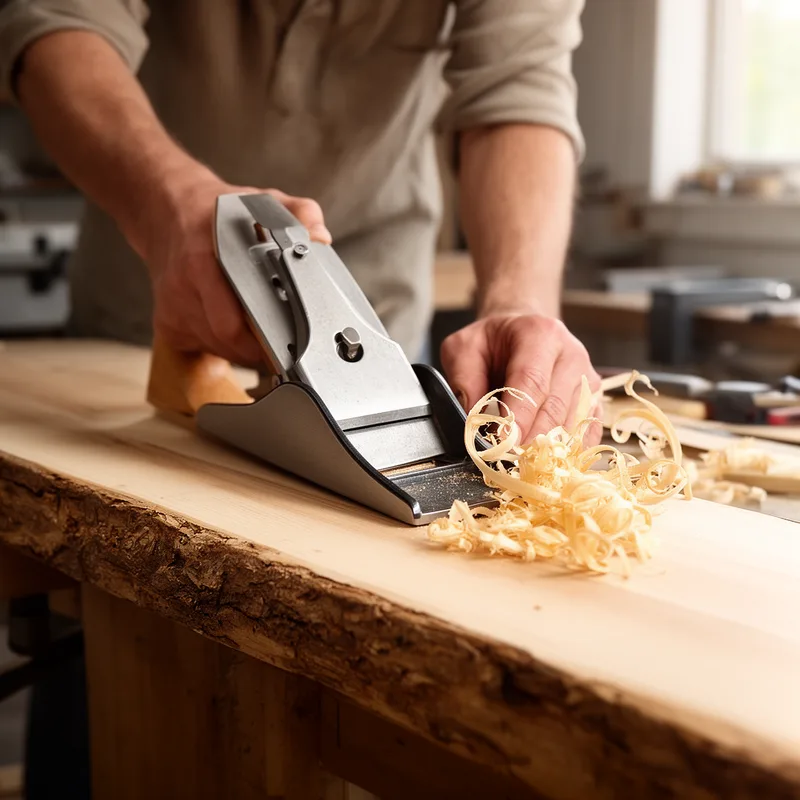
fore plane
- noun
- /fɔr pleɪn/
- Specialized
- The carpenter used a fore plane to flatten the rough surface before finishing the board.
Examples
-
Traditional woodworkers often rely on a fore plane for preparing large panels by hand.
-
After the jack plane, the fore plane helps bring the wood closer to its final shape.
-
The carpenter used a fore plane to smooth the wood.
-
I bought two fore planes for my workshop.
-
The carpenter used a fore plane to flatten the rough surface before finishing the board.
-
Traditional woodworkers often rely on a fore plane for preparing large panels by hand.
-
After the jack plane, the fore plane helps bring the wood closer to its final shape.
Synonyms

 97
7.1
97
7.1

A hand tool with a sharp blade for smoothing wood
 2
7.4
2
7.4
A power tool with a sharp blade that smooths wood surfaces

 1
7.6
1
7.6
A hand tool with a long flat bottom for smoothing and shaping wood before finishing
A hand tool with a sharp adjustable blade for smoothing and shaping wood surfaces

A hand tool with an adjustable blade used to smooth or shape wood

A small hand tool that makes wood surfaces even and fine
A small hand tool that makes wood surfaces smooth

A long hand tool that smooths and flattens the edges of boards for a tight fit

A long flat tool for making board edges straight and smooth so they fit together

A long tool carpenters use to make board edges straight
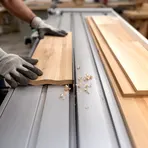
A long tool that makes the edges of boards straight so they fit together
How Long
- Specialized

- Specialized
- Specialized
1
7.6
- Specialized
Surface Forms
Morphology
fore + plane
While 'plane' (a woodworking tool) is fully transparent, the element 'fore' is archaic/technical (roughly 'before' or 'front') and is not a high-frequency word for B1 learners; knowing 'fore' might suggest this is a plane used earlier or at the front of the process, giving a partial clue. The precise sense — an intermediate-length plane with a specific role in flattening and smoothing — is domain-specific and not fully predictable from the parts, so the expression is only partially transparent to an average B1 learner.
Etymology
Fore plane gets its name from its parts: fore meaning 'before' and plane meaning the tool that shaves wood. It was used before the final smoothing step to remove rough wood and make a board flat, so the name now means the middle-sized plane used to flatten and smooth wood.