
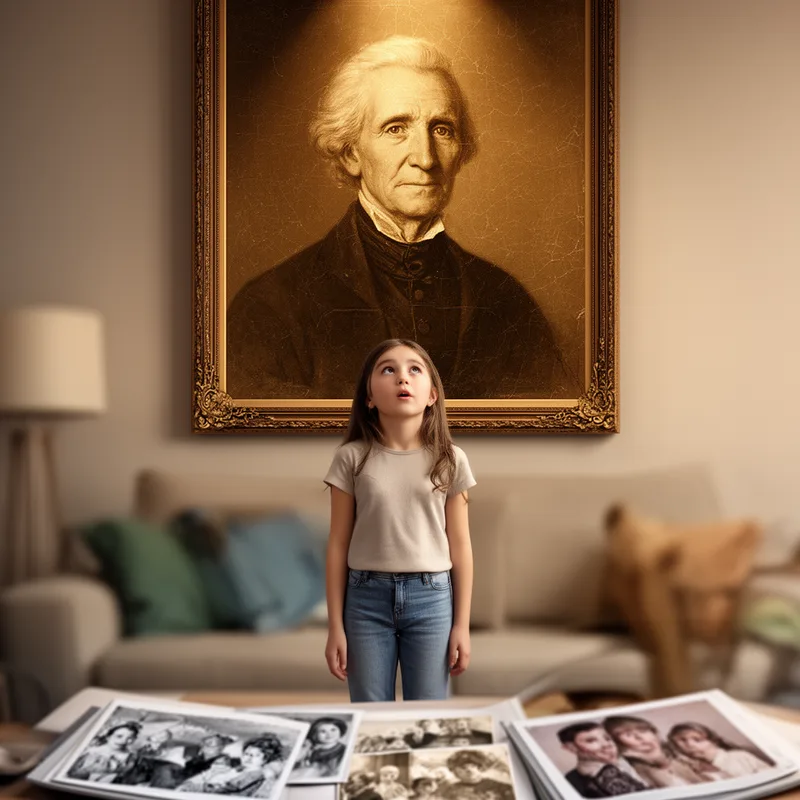
forbearer


 1
7.9
1
7.9
- noun
- /fɔrˈbɛrər/
- We often reflect on the sacrifices made by our forbearers to secure our freedom.
Examples
-
You see, our forbearers fought savage Indians and Mexican bandits to win Los Angeles.
-
And he said to me in this e-mail, I wish I had been able to do for my forbearers what you've done for yours.
-
Your forbearers will see you now.
-
Because of high unemployment rates, some have no choice but to move back in with parents and grandparents, but others see the lifestyle of their forbearers as a viable alternative.
Blog text (14) -
For love of liberty, our forbearers... ...colonies few in number and with little to defend themselves... ...fought the war for independence... ...what was then the world's most powerful empire.
-
Are we to remain stagnant, clinging to the backward ways of our forbearers until this country turns to dust?
-
Enjoy the trip to the time of 1620 and our forbearers of the faith of Jesus Christ who fled from fierce persecution by the Church of England and others.
Blog text (24) -
As I said in 2008 and will say again: "Unless we squarely face our challenges as Americans—together—we risk losing the priceless heritage bestowed on us by the sweat and the sacrifice of our forbearers.
Blog text (26) -
My forbearers came to this country in search of a better life.
-
Learning about our forbearers helps us appreciate our family's history.
Synonyms
 419
2.4
419
2.4
A person in your family who lived long ago before your grandparents
 35
5.1
35
5.1
A person from older generations who helped start your family or its traditions
 12
8.2
12
8.2
An early ancestor who starts a family line or idea
 12
8.1
12
8.1
A person in your family who lived long ago
 2
8.6
2
8.6
A person in your family from past generations
 2
7.4
2
7.4
A person in your family who lived before you, like a great-grandparent
 1
8.4
1
8.4
A woman from an earlier generation who starts a family or tradition
 1
8.9
1
8.9
A family member who lived before you, for example a grandparent
 1
9.3
1
9.3
A person in your family from long ago, like a grandparent

An early relative in the direct family line, like a great-grandparent

A person in your family from an earlier time, for example a parent
Surface Forms
Morphology
Etymology
The word forbearer comes from old parts fore- 'before' and bear 'to carry', so it originally named someone who came before you in your family. It is like the word forefather, which is why forbearer means an ancestor.