
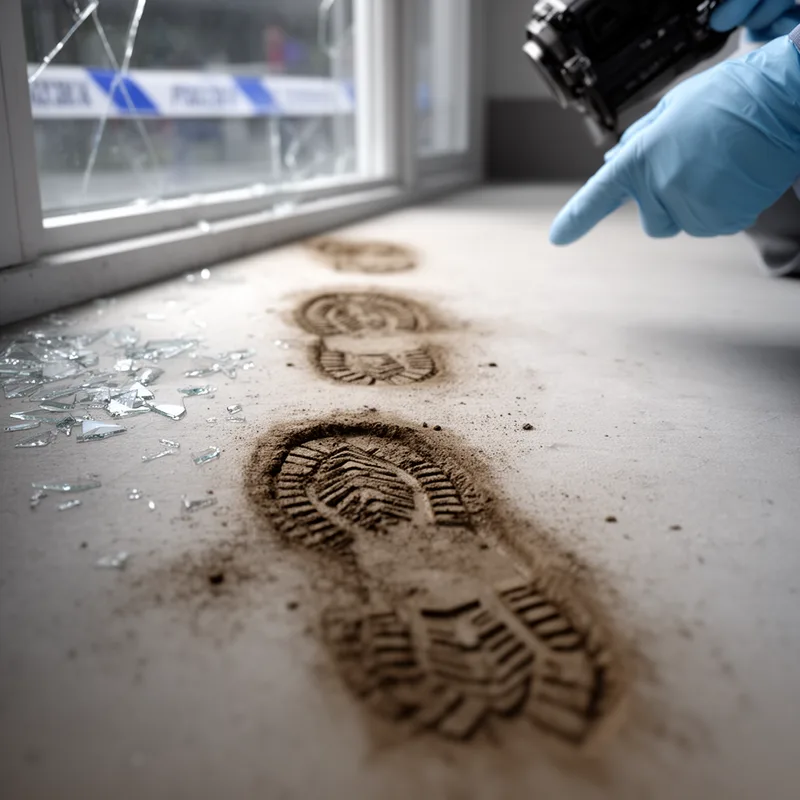
footprint evidence
- noun
- /ˈfʊtˌprɪnt ˈɛvɪdəns/
- Specialized
- The jury found the footprint evidence to be highly persuasive in reaching their verdict.
Examples
-
The detective found footprint evidence near the crime scene.
-
Investigators discovered footprint evidence leading away from the broken window.
-
The prosecution relied on footprint evidence to place the suspect at the crime scene.
-
Can footprint evidence really help solve this case?
-
The detectives found crucial footprint evidence that linked the suspect to the scene of the crime.
-
In the muddy ground near the house, there were clear footprint evidence suggesting someone had entered during the night.
-
The forensic team collected footprint evidence to help identify the intruder who broke into the museum.
Synonyms

 381
5.0
381
5.0

A piece of evidence that helps solve a crime or problem
 229
3.5
229
3.5
A set of clues that help solve a problem or a crime
 126
1.6
126
1.6
A mark left by a foot or shoe on a surface

A mark in the ground that shows someone was there
How Conclusive

Surface Forms
Morphology
The meaning 'evidence consisting of footprints' is directly and transparently derived from combining 'footprint' (an impression made by a foot or shoe) with 'evidence' (material that helps prove something); the first noun simply specifies the type of evidence. This noun–noun compounding is a regular, literal composition found cross-linguistically and would be obvious to a B1 learner who knows the constituent words.
Etymology
Footprint evidence comes from the simple image of footprints left in mud, dust, or soft ground at a scene. Police or detectives could follow and match these footprints to show someone had been there, which is why the phrase means 'evidence based on footprints'.