
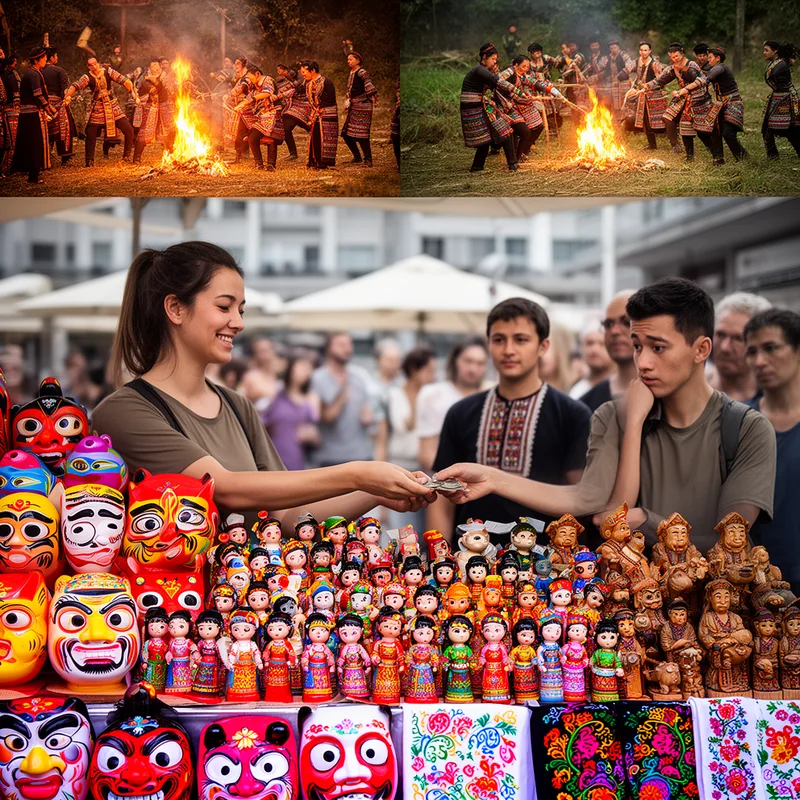
folklorism
9.9
Use of traditional customs or stories in a different culture, often to sell things
- noun
- /foʊkˈlɔːrɪzəm/
- Formal
:
folklorismo
- A recording from the second Romafest Gypsy Dance Festival in 2000, accessed 15 August 2015, for example, shows the vitality that is brought to what might be dismissed as folklorism or invention.
Examples
-
The festival celebrated folklorism by showcasing dance and music from various cultures in a contemporary setting.
-
The artist's latest exhibit features folklorism, combining traditional stories with modern themes.
-
Many films today explore folklorism by incorporating myths and legends into their narratives.
How Authentic


Surface Forms
folklorism singular
folklorisms plural
Morphology
Etymology
Folklorism begins with folk ('people') and lore ('stories or customs'), plus the ending -ism (a 'practice' or 'system', like in tourism). So folklorism is the practice of taking traditional songs, stories, or customs from one group and using or changing them elsewhere, often for art or business.