

folk music
 21
2.0

- noun
- /foʊk ˈmjuːzɪk/
- She enjoys listening to folk music because it tells the stories of the people and their customs.
- American folk music
- Korean folk music
- Appalachian folk music
Loading YouTube…
Watch on YouTubeSo the folk music is really just about people and music.
- So the folk music is really just about people and music.
- There was folk music that the there was early Blues that was played on the banjo.
Examples
-
The radio station features a program dedicated to folk music from various cultures around the world.
-
Instead, I joined the folk music club and learned to sing camp songs and discuss social issues.
Fiction book (1996) -
But if you go way back, you know that all of that folk music from the African American experience goes into the Blues, right?
-
America may be said to have many coexisting folk music cultures rather than one shared by everyone.
Academic text (1997) -
Furthermore, Lomax held that folk music was a democratic art that came from local communities, both rural and urban.
Academic text (2013) -
Alan Lomax began collecting examples of folk music tucked away in rural regions during his teenage years.
Academic text (2013) -
Musical styles that arise from such cultures include traditional Appalachian folk music, blues, and spirituals.
Academic text (1995) -
In the mid-20th century, musicologists and folklorists collected Appalachian folk music that might otherwise have been lost.
Academic text (2007) -
During the festival, local artists performed traditional folk music that celebrated the community's heritage.
Synonyms
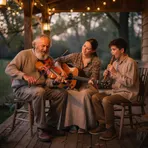 74
2.5
Traditional music passed down by people in a community
 1
3.2
A style of music where people perform traditional songs from a community
 1
3.4
Music from a cultural group that shows its customs and daily life


 1
6.7
A kind of music like old folk, country and blues that sounds simple and honest
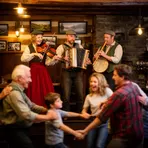
Music that uses older local folk styles
How Traditional
21
2.0
 23
1.0
Surface Forms
Morphology
The meaning 'traditional music of a community' is directly and compositionally derived from 'folk' (relating to a people or their traditions) + 'music' (organized sound), so a learner who knows both words can infer the MWE. This noun-noun combination follows a common, cross-linguistic pattern (people/tradition + music) and is therefore immediately comprehensible to B1 learners.
Etymology
Folk music comes from a simple idea: folk means ordinary 'people' and music means the songs they sing. These songs are often passed down by ear and tell a group's stories, so folk music today means 'traditional' music that shows a people's life and history.