

to fly blind
- phrasal verb
- /flaɪ blaɪnd/
- Specialized
- Modern pilots often need to fly blind when visibility is poor due to fog or rain, relying entirely on their instruments.
Examples
-
When you were teaching me how to fly blind in the simulator, you stood behind me and you talked me through the instructions.
-
During the training session, we practiced how to fly blind using only our navigation systems in the simulator.
-
In challenging weather conditions, it is essential for a pilot to fly blind and trust their instruments for a safe landing.
Synonyms

 7
7.9
7
7.9

Being without enough information or clear instructions in a difficult situation

To fly a plane using only instruments without seeing the ground or horizon
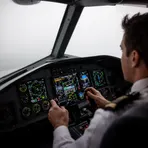
Using only instruments to fly a plane when you cannot see outside
Antonyms
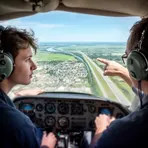
- Specialized
To pilot an airplane by looking at places on the ground rather than instruments
How Instrument-Dependent
- Specialized

- Specialized
Surface Forms
Morphology
The meaning is a metaphorical extension of the literal parts: 'blind' (lacking perception/information) applied to 'fly' suggests proceeding without necessary information or guidance, so the core idea can be inferred from the constituents. However, this is a figurative extension rather than a purely compositional, routine pattern, so a B1 learner may not fully predict the exact pragmatic sense without exposure.
Etymology
The phrasal verb fly blind comes from pilots who could not see outside in thick fog or storms and had to fly by using the plane's instruments while being 'blind' to the sky, so it means 'to operate an aircraft using instruments instead of looking outside'.