
fluorescein isocyanate
- noun
- /flɔːˈrɛs.iˌin ˌaɪ.soʊˈsaɪ.əˌneɪt/
- Specialized
- The laboratory used fluorescein isocyanate to label the antibodies in their experiment.
Examples
-
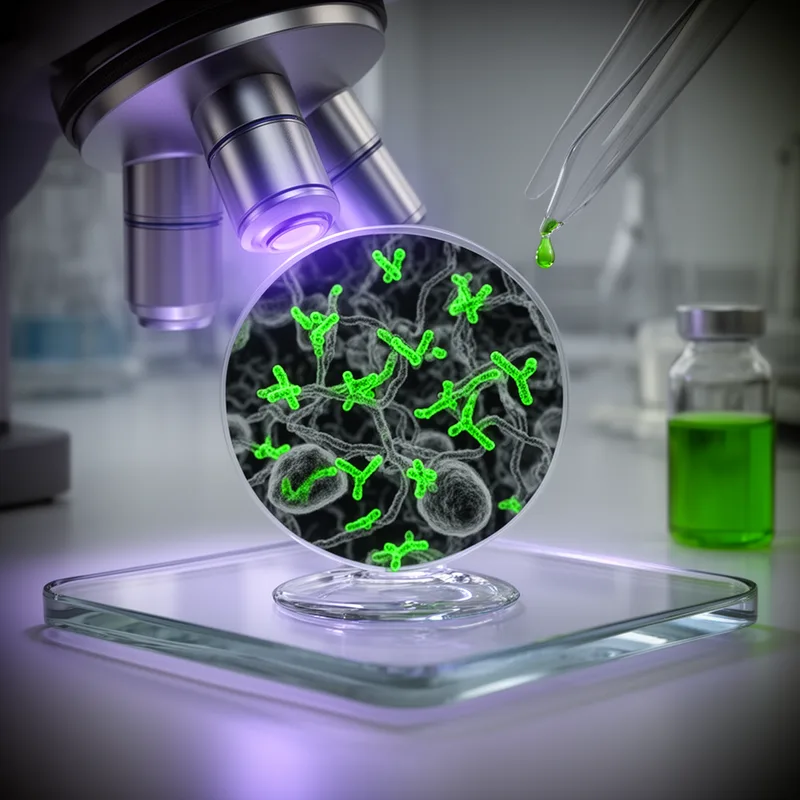
When excited by ultraviolet light, fluorescein isocyanate emits a bright green fluorescence.
-
Researchers rely on fluorescein isocyanate to make target proteins visible under the fluorescence microscope.
-
The researchers used fluorescein isocyanate to tag the antibodies.
-
Can you explain how fluorescein isocyanate works in microscopy?
-
Researchers rely on fluorescein isocyanate to make target proteins visible under the fluorescence microscope.
-
The laboratory used fluorescein isocyanate to label the antibodies in their experiment.
-
When excited by ultraviolet light, fluorescein isocyanate emits a bright green fluorescence.
Synonyms

A yellow-green dye that shines under a microscope and is used to mark proteins or antibodies

A chemical that glows under a microscope to stain cells
Surface Forms
Morphology
The compound name is compositionally interpretable: a B1 learner who knows 'fluorescein' (a fluorescent dye) and 'isocyanate' can infer this is a fluorescing isocyanate compound (i.e., a form of fluorescein with an isocyanate group). However, the precise technical function—its reactivity and role as a tagging reagent for antibodies in immunofluorescence—is specialized and not fully predictable from the basic dictionary senses, making the meaning only partially transparent to learners.
Etymology
Fluorescein isocyanate comes from two parts: fluorescein, a dye that 'glows' under special light, and isocyanate, a chemical 'tag' that can 'stick to' proteins. So the name gives a clear image: a glowing tag used to 'label' antibodies or proteins so they show up under a microscope with special light.

