
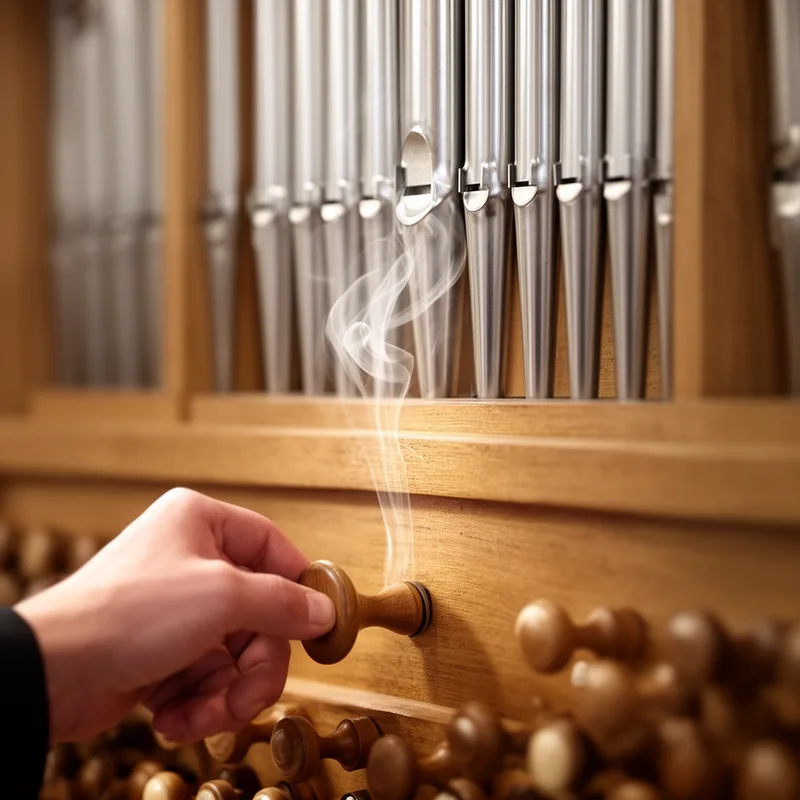
flue stop
- noun
- /flu stɑp/
- Specialized
- The cathedral organ features a variety of flue stops that create rich, mellow sounds.
Examples
-
Many organists prefer using a flue stop for accompanying choral pieces.
-
The organist adjusted the flue stop for a richer sound.
-
He adjusted the flue stop to achieve a softer tone for the hymn.
-
Can you identify the flue stops on this organ?
-
He adjusted the flue stop to achieve a softer tone for the hymn.
-
Many organists prefer using a flue stop for accompanying choral pieces.
-
The cathedral organ features a variety of flue stops that create rich, mellow sounds.
Synonyms

 8
8.9
8
8.9

A knob on a pipe organ that controls which pipes sound

A group of pipes on an organ that make a particular sound when you choose them
How Bright
- Specialized

- Specialized
Surface Forms
Morphology
The compound denotes a type of organ 'stop' associated with 'flue' pipes, so its meaning is directly built from 'flue' (flue pipe) + 'stop' (organ control). This follows a regular English noun–noun specification pattern (a stop for flue pipes), making the meaning predictable to a learner who knows both constituents.
Etymology
Flue stop comes from the pipe organ: a flue is a pipe where air makes the sound and a stop is the control that lets those pipes play. So a flue stop is the organ control that brings in those pipes to make a soft, mellow 'sound', which is why it names that particular kind of tone on the organ.