
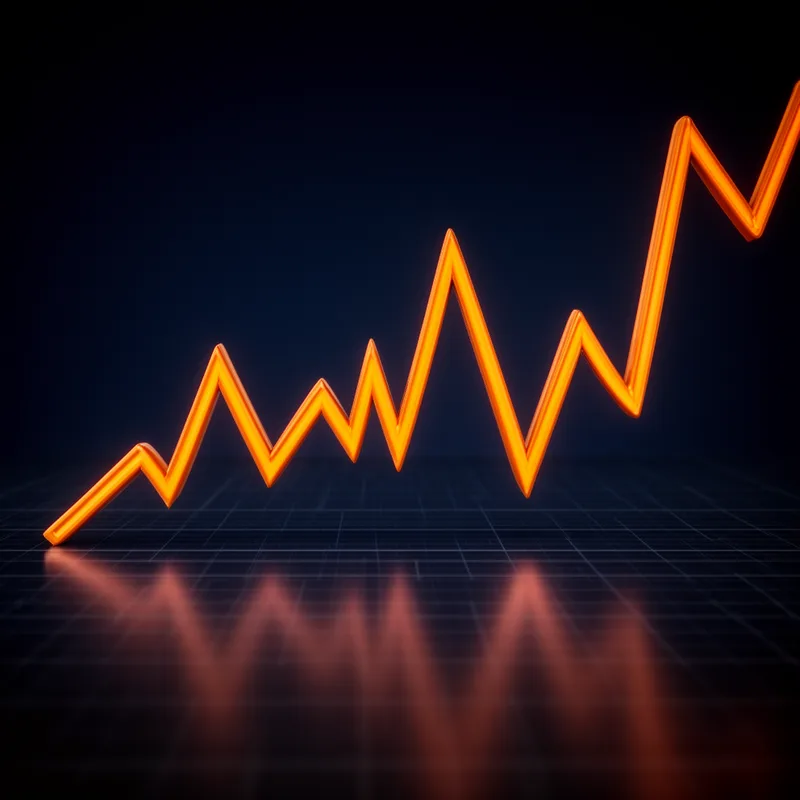
fluctuation
 76
6.3
76
6.3

- noun
- /ˌflʌk.tʃuˈeɪ.ʃən/
- There has been a noticeable fluctuation in the stock market over the past few weeks.
- price fluctuations
- temperature fluctuations
- exchange rate fluctuations
Loading YouTube…
Watch on YouTubeSo I never had any form of significant fluctuation prior to this.
- So I never had any form of significant fluctuation prior to this.
- Her behavior, you know, sometimes she had fluctuations, as many people do.
- I fluctuate all the time and fluctuations are normal and fluctuations are totally OK.
- They examined the relationship between fluctuations in timing and blinking.
- And it means you don't understand the impermanence and the fluctuations that are natural in life.
- And on the output side, you have unexpected expenses, you have fluctuations in expenses.
- On top of that, there's this quantum fluctuation noise.
- Is it little fluctuations in space-time, what's left?
- Well, this this was the derivation of the fluctuation of no doubt.
- They should have slightly smaller quantum fluctuations than the largest scales.
- And the statistical properties of the fluctuations are incredibly simple.
Examples
-
Hence, expectations often drive exchange rates, causing the fluctuations in currency values to be large and rapid.
Academic text (1999) -
What we saw last week was a fluctuation in yields.
-
Could a quantum fluctuation change what time is?
-
There is currently a 1.4 G fluctuation.
-
And what he wanted to study was the fluctuations of bonds and stock prices.
-
In fact, India is far more exposed to oil market fluctuations than other major emerging economies.
Academic text (2015) -
Motion picture production rose and fell according to seasonal fluctuations, which heavily influenced the demand for labor.
Academic text (2012) -
Diversified agroecosystems have become more important for agriculture as climate fluctuations have increased.
Academic text (2011) -
The scientist noted a significant fluctuation in temperature throughout the experiment.
-
Farmers are concerned about the fluctuation in crop prices this season.
Synonyms
 113
3.0
113
3.0
A change in amount or condition from what is normal
 49
7.1
49
7.1
How likely a person, situation, or market is to change quickly and unexpectedly
 46
7.5
46
7.5
Small quick changes in an electronic signal that cause problems
 29
5.7
29
5.7
The amount that something changes over time or between things
 18
5.5
18
5.5
A difference from what is usual or expected
 7
6.9
7
6.9
A small repeated change in an electrical signal that makes noise
 6
7.0
6
7.0
One complete back-and-forth movement, like a pendulum swing
 4
8.8
4
8.8
A small change that makes a system behave differently
 1
5.1
1
5.1
A lack of balance or firm control that causes shaking

A quality of changing often, like rain or mood
Antonyms


How Variable
- Specialized
49
7.1
 114
5.1
76
6.3
114
5.1
76
6.3
- Specialized
9
7.2
113
3.0
∞
1.1
Surface Forms
Morphology
Etymology
Fluctuation comes from the Latin root flu-, from fluere, which means 'to flow', and it is the same root as the everyday word flow. So a fluctuation is a change that moves up and down like a small flow, which fits how we use it for amounts or levels that go up and down.