
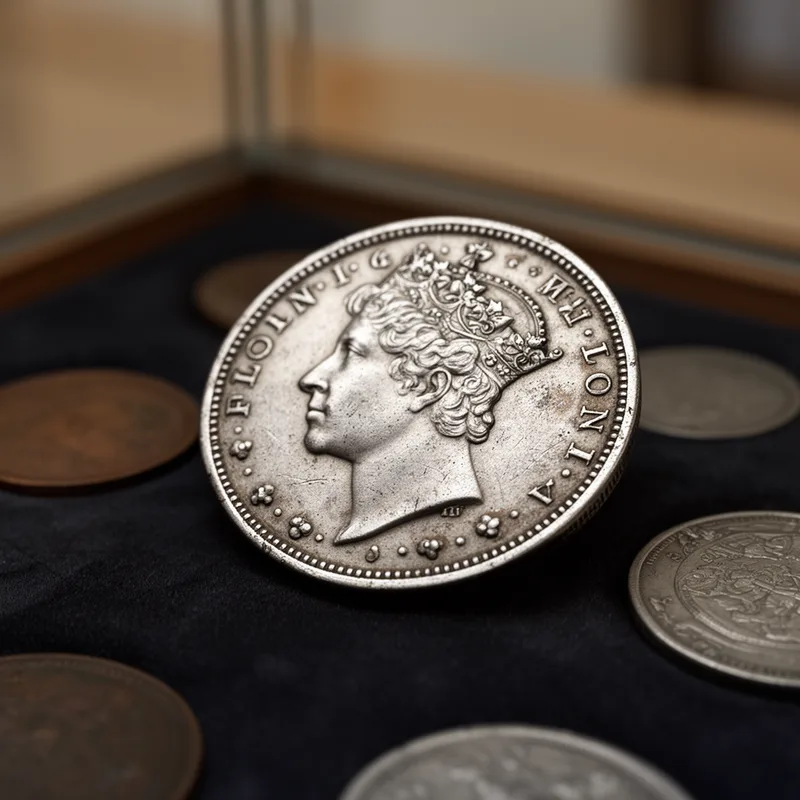
florin
 1
9.9
1
9.9

- noun
- /ˈflɔːrɪn/
- Archaic
- The florin was once considered a reliable currency across several European countries.
Examples
-
Ten gold florins.
-
She paid for the antique vase with three shiny florins she found in her grandfather's drawer.
-
But the amount is 50 florins.
-
A commemorative florin, or silver 2-shilling piece, struck by Australia in 1951.
Academic text (1995) -
Ten florins.
-
Fifteen silver florins.
-
If nutmegs grew like mussels, you'd get a barrelful for a florin.
-
The florin was widely used in Western Europe as a unit of account and in international transactions, presumably because of its stability in terms of other currencies (Table 1).
Academic text (1990) -
In medieval times, a merchant might accept two florins for a rare piece of silk.
Synonyms

Former money used in the Netherlands worth 100 cents, replaced by the euro in 2002
Compounds
Surface Forms
Etymology
The word florin comes from the Italian fiorino, 'little flower' (think English flower), the name of a famous coin from Florence; Britain later used florin for a two-shilling coin. So a British florin was named after that old 'flower' coin.