

floriferousness
- noun
- /flɔːˈrɪfərəsnəs/
- Specialized
- The garden's floriferousness attracts many bees.
Examples
-
The floriferousness of the garden impressed all the visitors during spring.
-
Breeders select plants for their floriferousness to create more colorful displays.
-
High floriferousness is a desirable trait in ornamental horticulture.
-
Why does this plant exhibit such high floriferousness?
-
The floriferousness of the garden in spring attracts many visitors.
-
This plant's floriferousness creates a stunning display of colors throughout the season.
-
Her efforts in gardening have resulted in a remarkable floriferousness that delights her neighbors.
Synonyms
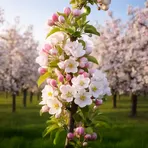
The time when flowers open and bloom
Antonyms


How Floriferous
- Specialized

 15
2.0
15
2.0
Surface Forms
Morphology
floriferousness = floriferous (semi-transparent) = flor + iferous + ness
The noun is a regular -ness derivation from the adjective 'floriferous'.
Etymology
Floriferousness comes from Latin parts flor- meaning 'flower' and -ferous meaning 'bearing' or 'carrying', like in transfer ('to carry across'). So floriferousness means the quality of 'bearing many flowers', which explains why we use it for plants that produce lots of blooms.