
flightlessness


 1
7.1
- noun
- /ˈflaɪt.ləs.nəs/
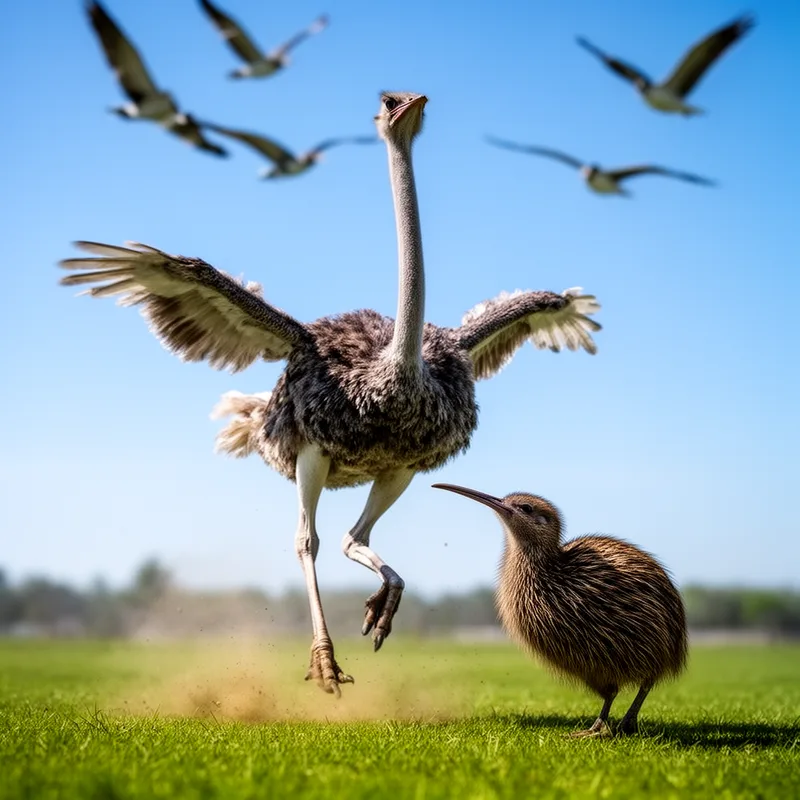
- The unique flightlessness of the kiwi makes it vulnerable to introduced predators.
Examples
-
The flightlessness of ostriches is well-known.
-
Scientists study the evolutionary reasons behind the flightlessness of certain island birds.
-
The flightlessness of ostriches has led them to develop strong legs for running.
-
The flightlessness of certain bird species can be attributed to evolution.
-
The flightlessness of the ostrich prevents it from escaping predators swiftly.
-
The island's unique ecosystem has led to the flightlessness of several bird species.
-
Researchers studied the flightlessness of certain birds to understand their evolutionary adaptations.
Surface Forms
Morphology
flightlessness = flightless (transparent) = flight + less + ness
Standard derivation: the adjective 'flightless' (unable to fly) takes '-ness' to form the noun for that state.
Etymology
Flightlessness comes from flight ('the act of flying') plus -less ('without'), as in hopeless, and -ness ('a state of being'). So flightlessness means 'the state of not being able to fly', like island birds that walk or run instead of flying.