

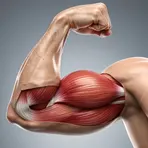
flexor muscle
- noun
- /ˈflɛksər ˈmʌsəl/
- Specialized
- To work the forearm flexor muscles, begin in a seated position.
- hip flexor muscles
Loading YouTube…
Watch on YouTubeAnd then I go through little tests in supine to see the length of the hip flexor muscles.
- And then I go through little tests in supine to see the length of the hip flexor muscles.
Examples
-
So this is a neuron that's activated by sensory input of stretching those muscles, the flexor muscles sending a signal up to the brain.
-
Now we see the activity from the neck flexor muscles.
-
Muscle spasms were usually observed in hip flexor muscles when the hip and knee were fully extended.
Academic text (2001) -
The intensity of the stimulation was adjusted to achieve a strong visible contraction of the quadriceps and plantar ankle flexor muscles.
Academic text (2000) -
Furthermore, the abdominal muscles are aided by the hip flexor muscles, which act directly on the lumbar spine, whereas the hip extensors do not.
Academic text (1997) -
To strengthen your flexor muscle, try doing bicep curls with light weights.
-
The flexor muscle in your forearm helps you grasp objects more effectively.
-
Stretching the flexor muscle can improve your range of motion and reduce the risk of injury.
Synonyms
 679
1.3
679
1.3

A part of the body that gets shorter to make parts move or stay still
 4
7.2
4
7.2
A muscle that bends a joint
Antonyms


Surface Forms
Morphology
The meaning 'a muscle that bends a joint' is directly and transparently built from 'flexor' (muscle responsible for bending) plus 'muscle' (body tissue that produces movement); the phrase is essentially compositional and even partly tautological. This follows standard anatomical naming patterns and has clear cross-linguistic parallels, so a B1 learner who knows the constituent words can readily infer the meaning.
Etymology
Flexor muscle comes from the word flexor, based on a root that means 'to bend'. A flexor is the muscle that pulls to bend a joint, like when you bend your elbow, so the name means a muscle that makes a part of your body 'bend'.