
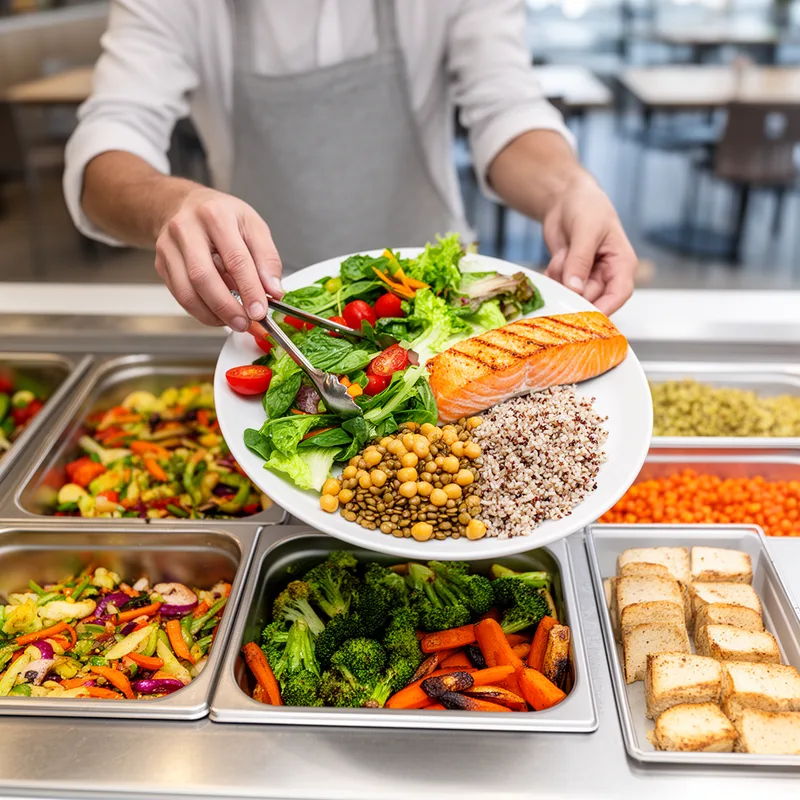
flexitarianism
- noun
- /ˌflɛksɪˈtɛəriənɪzəm/
- Many restaurants offer menus that cater to flexitarianism as well as vegetarian and vegan diets.
Examples
-
Flexitarianism is gaining popularity among people who want to reduce their meat consumption without cutting it out entirely.
-
Her commitment to flexitarianism means she occasionally enjoys seafood, though her meals are mostly plant-based.
-
She follows a flexitarianism diet to stay healthy.
-
Many people are adopting flexitarianism to reduce their carbon footprint.
-
Many people choose flexitarianism because it allows them to enjoy both plant-based meals and occasional meat.
-
Adopting flexitarianism can lead to better health by focusing on vegetables while still allowing for fish and poultry.
-
The flexitarianism lifestyle promotes eating more fruits and vegetables, while still enjoying meat in moderation.
Synonyms

A way of eating that is mostly plants but sometimes includes meat or fish
Antonyms



How Vegetarian

Surface Forms
Morphology
flexitarianism = flexitarian (semi-transparent) = flexi + vegetarian + ism
Formed from 'flexitarian' + '-ism'; 'flexitarian' is a blend of 'flexible' and 'vegetarian', so the practice/ideology sense is derivable but the blend-form 'flexi-' may be unfamiliar to some learners.
Etymology
The word flexitarianism comes from combining flexible (meaning 'not strict') and vegetarian (meaning 'no meat'). So flexitarianism is a mostly vegetarian way of eating that stays 'flexible' and allows meat or fish sometimes.