

fleshling
- noun
- /ˈflɛʃlɪŋ/
- Archaic
- The mother animal stayed close to her fleshling to keep it safe and warm.
Examples
-
Predators often target a fleshling because it cannot defend itself yet.
-
The farmer found a weak fleshling beside its mother in the barn at dawn.
-
The tiny fleshling struggled to stand.
-
Look at that adorable fleshling over there!
-
The farmer found a weak fleshling beside its mother in the barn at dawn.
-
Predators often target a fleshling because it cannot defend itself yet.
-
The mother animal stayed close to her fleshling to keep it safe and warm.
Synonyms

 12
3.5
12
3.5

A very young animal that has just come out of its egg, like a bird or turtle
 2
5.5
2
5.5
A child or baby animal not yet fully grown
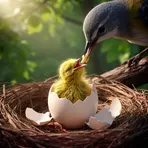
A young animal recently hatched or born
Antonyms

How Young

Surface Forms
Morphology
Etymology
Fleshling comes from the word flesh 'body' plus the ending -ling meaning 'small one', just like duckling. So a fleshling is a very young, small animal — a 'small body' that needs care.