
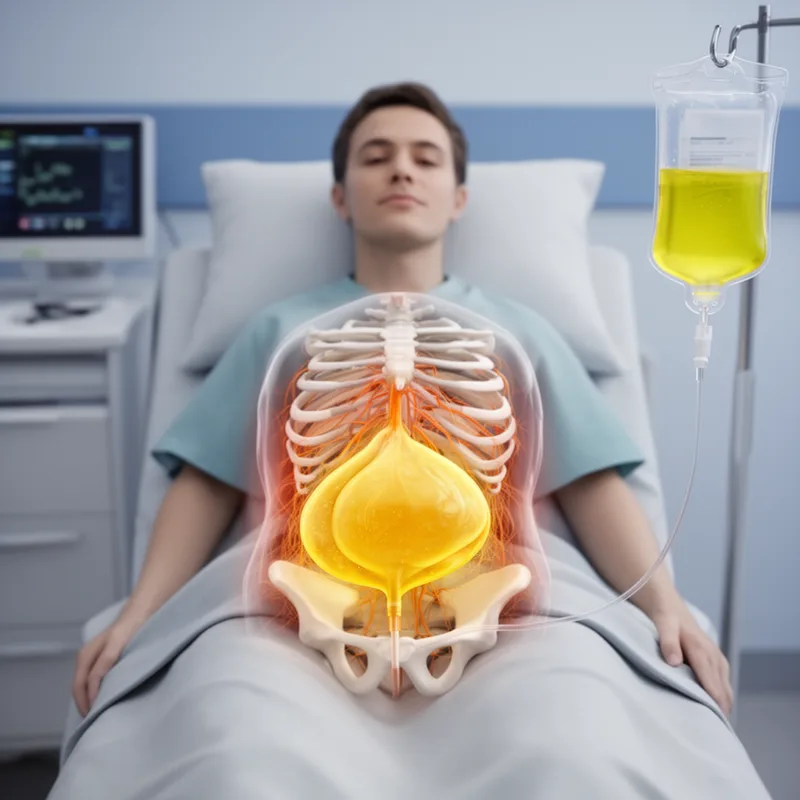
flaccid bladder
- noun
- /ˈflækɪd ˈblædər/
- Specialized
- The patient developed a flaccid bladder after spinal cord injury, requiring catheterization to empty his bladder.
Examples
-
In cases of flaccid bladder, individuals may not feel the urge to urinate even when the bladder is full.
-
A neurologist explained that a flaccid bladder can result from disruption of nerve pathways controlling urination.
-
The patient was diagnosed with a flaccid bladder.
-
Many individuals with diabetes may develop a flaccid bladder.
-
In cases of flaccid bladder, individuals may not feel the urge to urinate even when the bladder is full.
-
The patient developed a flaccid bladder after spinal cord injury, requiring catheterization to empty his bladder.
-
A neurologist explained that a flaccid bladder can result from disruption of nerve pathways controlling urination.
How Tight


Surface Forms
Morphology
The phrase is compositionally built from 'flaccid' (soft, weak) + 'bladder' (organ that stores liquid), so a learner who knows both words can infer a bladder that is limp or not firm and likely not functioning normally. However, the specific clinical implications (distension, loss of contraction/continence, nerve damage) are specialized medical details not fully predictable from the basic words, so the expression is only partially transparent to a B1 learner.
Etymology
The term flaccid bladder gives a simple image: flaccid means soft and loose, and bladder is the body bag that holds urine. When the nerves that tell the bladder to 'squeeze' stop working, it becomes like a soft water balloon that cannot push urine out, so a person may not feel the need 'to urinate'.