
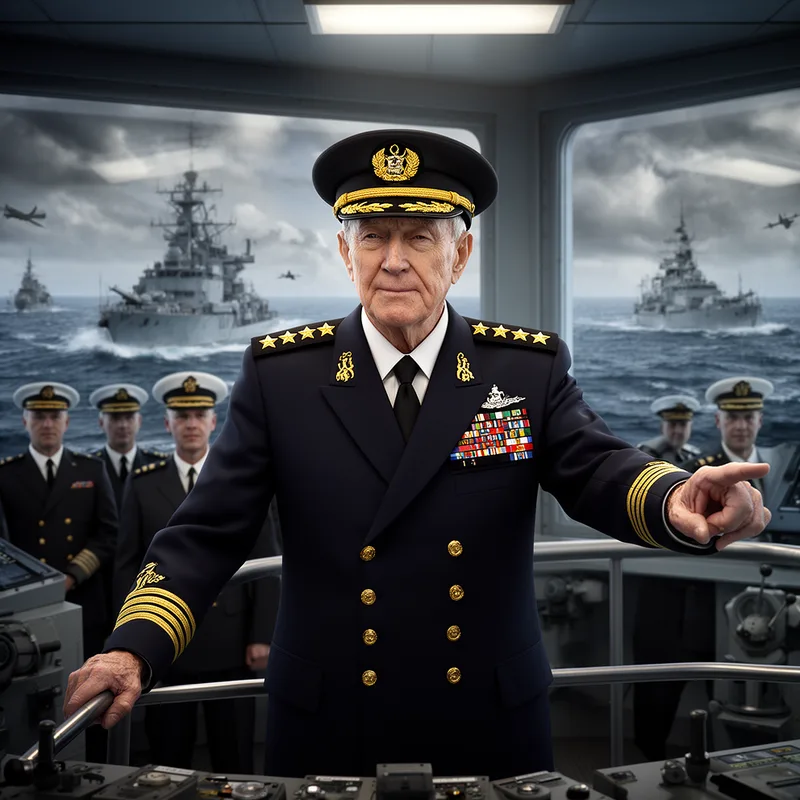
five-star admiral
- noun
- /ˈfaɪvˌstɑr ˈædmərəl/
- Formal
- Only a select few officers in history have ever attained the title of five-star admiral.
Examples
-
The position of five-star admiral was created to establish seniority over allied officers.
-
Fleet Admiral Chester Nimitz was promoted to the rank of five-star admiral during World War II.
-
The President appointed a new five-star admiral last week.
-
During the war, the United States had several five-star admirals leading the fleet.
-
During World War II, Chester W. Nimitz held the rank of five-star admiral in the United States Navy.
-
The president promoted him to five-star admiral in recognition of his exceptional leadership during the conflict.
-
In ceremonies, the five-star admiral was honored for his decades of service to the navy and the nation.
Synonyms

 1
8.2
1
8.2

A top officer who commands all ships in a country's navy
How Senior

Surface Forms
Morphology
five-star + admiral
The meaning is directly compositional: 'five-star' signals the highest rating or rank and 'admiral' names a senior naval officer, so together they denote an admiral of the highest rank. The 'five-star' pattern is a productive, cross-contextual English construction (hotels, ratings, military insignia) and is paralleled in many languages, so a B1 learner knowing the parts would readily infer the meaning.
Etymology
Five-star admiral comes from the rank badge: officers at the highest level wore five stars on their uniform in World War II to show they were above other officers in the navy. The stars clearly marked the top leader, so today the phrase means 'the very top rank'.