
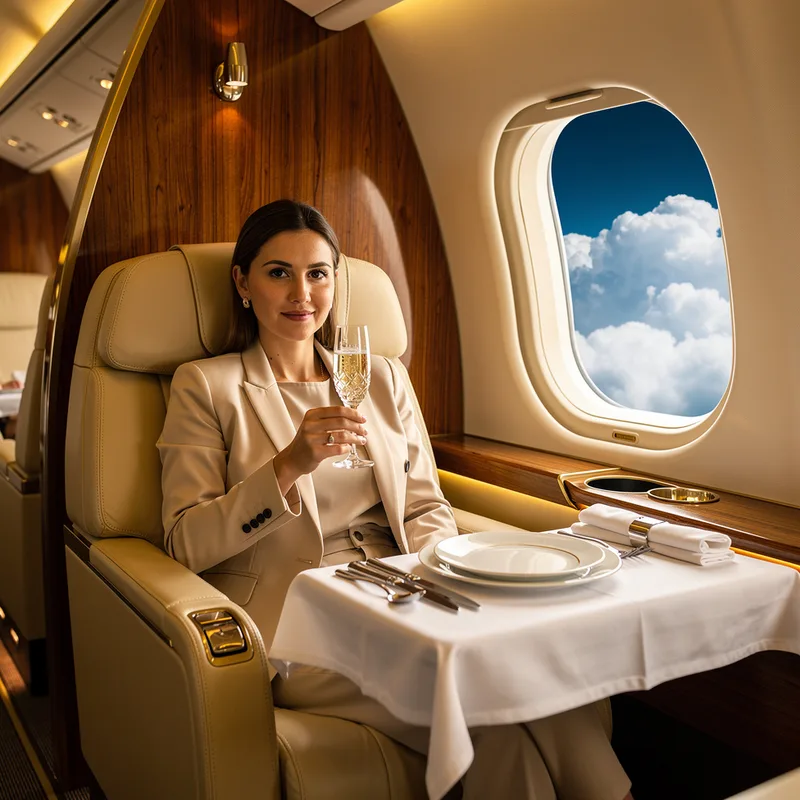
first class
 35
3.7
35
3.7

- adverb
- /fɜrst klæs/
- Many travelers prefer to fly first class for the added comfort and luxury.
- fly first class
- travel first class
- go first class
Loading YouTube…
Watch on YouTubeLike I even, I flew first class about a month ago.
- Like I even, I flew first class about a month ago.
- They flew me to Toronto first class, and I'm like, what?
- You know, some people probably always get first class.
- And I'm going, Dad, don't talk about how you're flying first class.
- I'm like, let's get the best suite, let's fly first class.
- I do enjoy flying first class and I would like to continue that if that, if I can.
- And he says when booking passage on the Titanic, it's best to go first class.
- And I was sitting, you know, first class got two seats right?
Examples
-
We fly first class to Detroit and lay low for a couple weeks.
-
And I got to fly first class on Lufthansa.
-
I do enjoy flying first class and I would like to continue that if that, if I can.
-
Oh, so you like the first class treatment.
-
I was in first class once.
-
I would rather spend time with someone than travel first class around the world alone.
Blog text (34) -
I should travel first class.
Fiction book (2000) -
We flew you first class.
-
I've never flown first class before.
Fiction book (2000) -
I can't believe you flew first class.
Fiction book (1993)
Antonyms
How Luxurious

Surface Forms
Morphology
The meaning 'the highest rank or grade' is directly and compositionally derived from 'first' (preceding/all-important) + 'class' (a category or rank). This adj+noun grading pattern is cross-linguistically common and follows normal English composition, so a B1 learner who knows both words will readily infer the MWE's meaning.
Etymology
First class The adverb first class comes from the travel idea of the first class group that had the best seats and service. So doing something first class means doing it in the most comfortable or top way.