
firedamp
 1
9.9

- noun
- /ˈfaɪərˌdæmp/
- Specialized
- The web's invisibility and imponderableness, associated with similar qualities inhering in the firedamp (grisou), inform the passage's symbolic level.
Examples
-
He recalled some early work with his father on firedamp (methane) in mines:
Academic text (1998) -
Though investigators aren't certain of the cause of the explosion, it was probably started by the ignition of firedamp—combustible gas made up mostly of methane—and coal dust within the mine.
Blog text (30) -
In this way, I learned that firedamp is lighter than air and not dangerous to breathe.
Academic text (1998) -
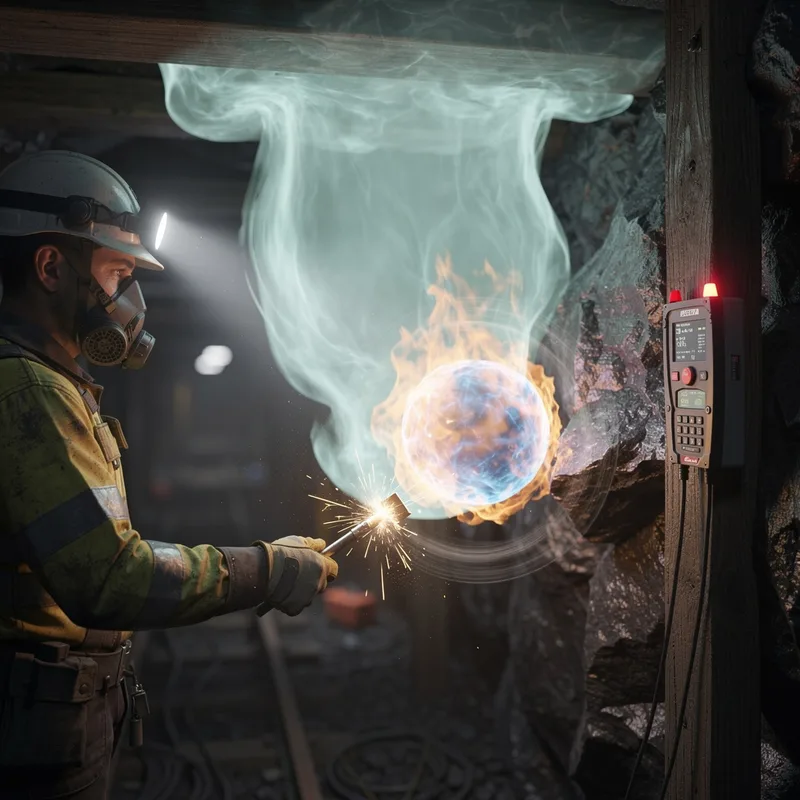
In the mines, there's a thing called a firedamp, when a single spark sets the air on fire.
-
To demonstrate the effects of breathing firedamp, my father told me to stand up and recite Mark Antony's speech from Shakespeare's Julius Caesar, beginning "Friends, Romans, countrymen."
Academic text (1998) -
The miners were warned about the dangers of firedamp, as it could lead to catastrophic explosions in the tunnels.
-
During the safety training, they learned how to detect firedamp to prevent accidents in the coal mine.
-
A sudden rush of firedamp indicated an imminent risk of explosion, prompting the workers to evacuate immediately.
Surface Forms
Morphology
Etymology
Firedamp comes from the everyday parts fire and damp, where damp once meant 'vapor' or 'moist air' rather than just 'wet'. Miners used the name for the dangerous gas underground that can catch 'fire' and explode, so the word directly describes the hazard it names today.