
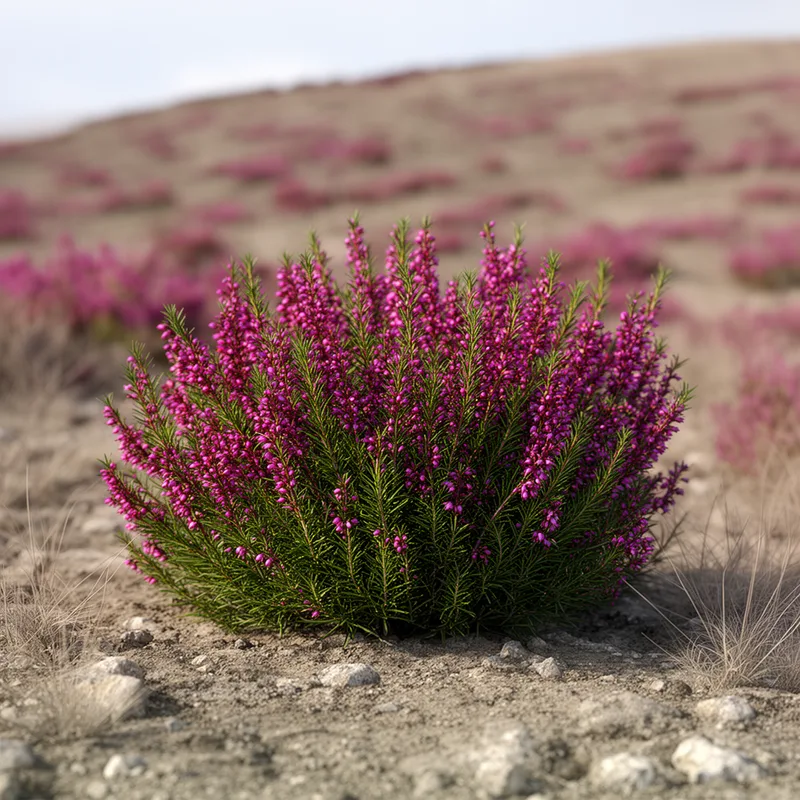
fine-leaved heath
- noun
- UK
- The hillside was covered in fine-leaved heath, adding a splash of color to the landscape.
Examples
-
Gardeners often use fine-leaved heath to create natural-looking borders in rock gardens.
-
I spotted a fine-leaved heath while hiking in the moors.
-
Fine-leaved heath thrives in acidic, well-drained soils and blooms vibrantly in late spring.
-
The fine-leaved heath blooms beautifully in the spring.
-
Fine-leaved heath thrives in acidic, well-drained soils and blooms vibrantly in late spring.
-
Gardeners often use fine-leaved heath to create natural-looking borders in rock gardens.
-
The hillside was covered in fine-leaved heath, adding a splash of color to the landscape.
Synonyms

A low European shrub with purple-red bell-shaped flowers that grows on heaths

A small European shrub with thin needle-like leaves and bell-shaped purple or pink flowers
A low shrub with purple bell-shaped flowers that grows on open wild land
Surface Forms
Morphology
The noun phrase is directly compositional: 'fine-leaved' describes the leaf form and 'heath' denotes a low shrub, so the combined meaning is simply a heath with slender leaves. This follows a standard adjective + noun pattern and is immediately predictable for a B1 learner who knows both constituents, even if they may not know the exact botanical species.
Etymology
Fine-leaved heath simply describes the plant: fine-leaved means it has thin, small leaves and heath is open, wild land where low shrubs grow. So the name refers to 'a low shrub with thin leaves that grows on heathland'.

