
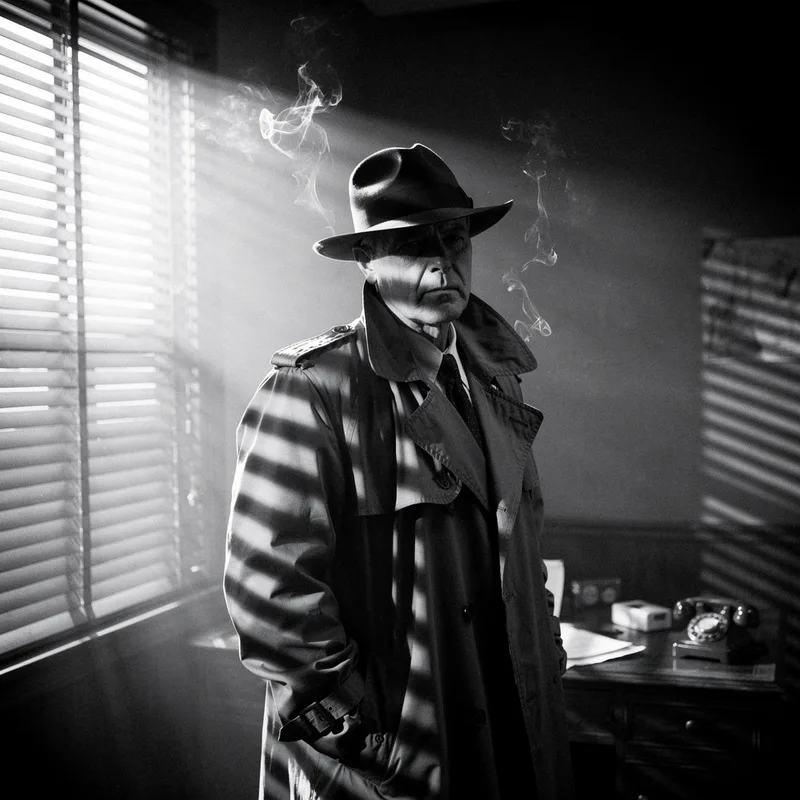
film noir
 20
7.0
20
7.0

- noun
- /fɪlm nwɑr/
- Many classic film noir movies feature shadowy streets and morally ambiguous characters.
- film noir movies
- classic film noir
- film noir scene
Loading YouTube…
Watch on YouTubeThis trend has its roots in film noir.
- This trend has its roots in film noir.
- OK FB, very stark sound, very film noir sound.
Examples
-
Think of the film noir movies, such as Citizen Kane and the interior scenes from The Godfather.
Academic text (2003) -
And I feel like I'm in a film noir when I'm travelling in a car, and there's someone next to me talking about a dame with a gun in a handbag.
-
"I studied them in my film noir course."
Fiction book (2002) -
"I think it's the first animated film noir ever made," the director said.
Fiction book (1998) -
"We used a film noir approach," said Cohen.
Fiction book (1996) -
"Edge of the City," a film noir impression, slows things down.
Blog text (7) -
Remember how the old critics used to dismiss film noir as B-movie trash?
Blog text (17) -
Films like Pistol-Whipped, Barnett's classic film-noir crime melodramas are studied in college campuses across the nation.
-
Neo-noir takes the tropes of film noir and updates them by placing them into contemporary or futuristic settings.
Blog text (27) -
In 2007, Ang Lee's film Lust, Caution presented the elegant world of 1940s "Golden Age" Shanghai while also referencing Western film noir culture through films such as Suspicion (1941).
Academic text (2009)
Synonyms
 81
7.7
81
7.7
A style of film or story about crime with a dark, gloomy mood
Antonyms


Surface Forms
Morphology
The basic sense — a 'dark' or morally shadowed film — is directly derivable from 'film' + 'noir' (noir = dark/cynical), so a learner who knows both words can infer a dark/crime movie. However, the term also encodes specific historical and stylistic conventions (1940s–50s crime cinema, pessimism, visual style) that are not fully predictable from the constituents alone, making the expression only partially transparent.
Etymology
The phrase film noir comes from French critics who put together film and noir, which means 'black', to describe movies with dark lighting and gloomy, dangerous stories. That's why film noir now means a style of crime movie with deep shadows, a dark mood, and hard, often dishonest characters.