
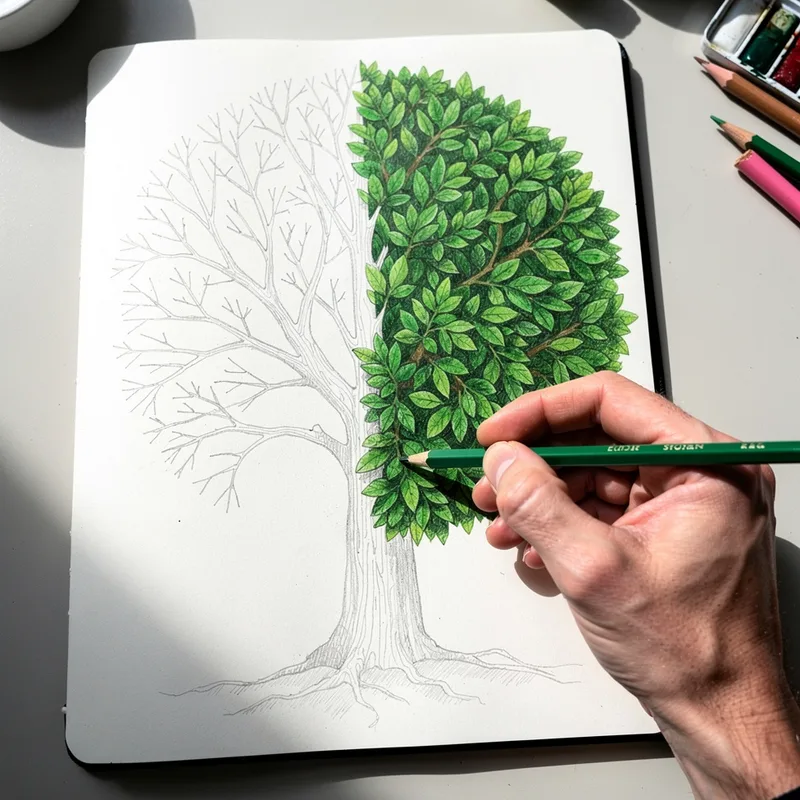
to fill out
 14
2.8
14
2.8

- phrasal verb
- /fɪl aʊt/
- So we are getting some new pieces to fill out the gaps that exist.
- fill out paperwork
- fill out an application
- fill out a bikini
Loading YouTube…
Watch on YouTubeSo we are getting some new pieces to fill out the gaps that exist.
- So we are getting some new pieces to fill out the gaps that exist.
- And then at higher levels we get more complex causal dynamics filled out by more complex forms of consciousness.
- But what he starts to see as he fills out where he is today, how much growth he's had in certain areas of your life.
Examples
-
Her face glowed with health, her cheeks already filling out so that he might barely have known her.
Fiction book (1998) -
And, uh, this-- his character really helps fill out the story.
-
Well, I'm gonna need you to fill this out for me, and we'll be able to get you in as soon as we can.
-
The muscles her hands touched were bigger now, and his body had filled out with maturity.
Fiction book (1991) -
Singers help fill out the sound when the group begins to explore unusual instrumental combinations.
Academic text (2000) -
They're doing beautiful work helping fill out the character of The Mandalorian.
-
Robert was going through a normal growth spurt, filling out, becoming more muscular; his voice was deeper too.
Fiction book (1997) -
She filled out the application form completely before submitting it.
-
In the past year, he has really filled out and gained more muscle.
-
The new furniture helped fill out the living room, making it feel more inviting.
Synonyms
 45
2.2
45
2.2
To make an animal gain weight and a sauce taste richer by giving more or richer food
 15
4.0
15
4.0
To add more details to an idea, plan, or argument
 15
3.5
15
3.5
Make something more complete by adding parts
 10
2.3
10
2.3
To give extra food so a person or animal gains weight
 5
3.8
5
3.8
To make someone or something fuller and rounder
 1
6.5
1
6.5
To add extra not needed words or details to make a text longer

To make someone or something rounder and fuller

To make an animal or person gain weight
Antonyms


How Full

Surface Forms
Morphology
fill + out
The verb 'fill' (add contents) combined with the particle 'out' (to completion) gives a reasonably predictable sense of making something complete by adding information, so a learner who knows the constituents can often infer the meaning when the object is a form. However, the extension from physical filling to completing an abstract document is a metaphorical shift and the exact collocational use (fill out vs. fill in, register differences) is not fully predictable without exposure.
Etymology
Fill out has the literal image of something becoming fuller: imagine a young player whose clothes start to fit tighter as their body fills out, or a story that gets more details when you add to it. So it means 'to become fuller' or 'to add more'.