
fibrovascular
- adjective
- /ˌfaɪbroʊˈvæskjʊlər/
- Specialized
- Scientists examined the fibrovascular structure of the stem to understand how it transports water.
Examples
-
During the resolution of the lesion, B cells and plasma cells increase in the tissues (n18) until finally a fibrous or, more rarely, a fibrovascular scar develops at the site.
Academic text (1991) -
Microphotograph shows dense compact bone and fibrovascular channels (H&E; original magnification x40).
Academic text (2010) -
The histopathology report was a benign fibrovascular lesion.
Academic text (1996) -
Osteomas are radiodense bony lesions that are characterized by the replacement of bone with fibrovascular fatty tissue.
Academic text (2008) -
The tissue was composed of papillary epithelial outgrowths with a fibrovascular stroma and an epithelial covering that was cuboidal to columnar (figure 2, B).
Academic text (2008) -
The plant's growth was supported by a fibrovascular network, which provided both strength and nutrients.
-
In botany classes, students learn about the fibrovascular tissues that are essential for plant health.
Compounds

- Specialized
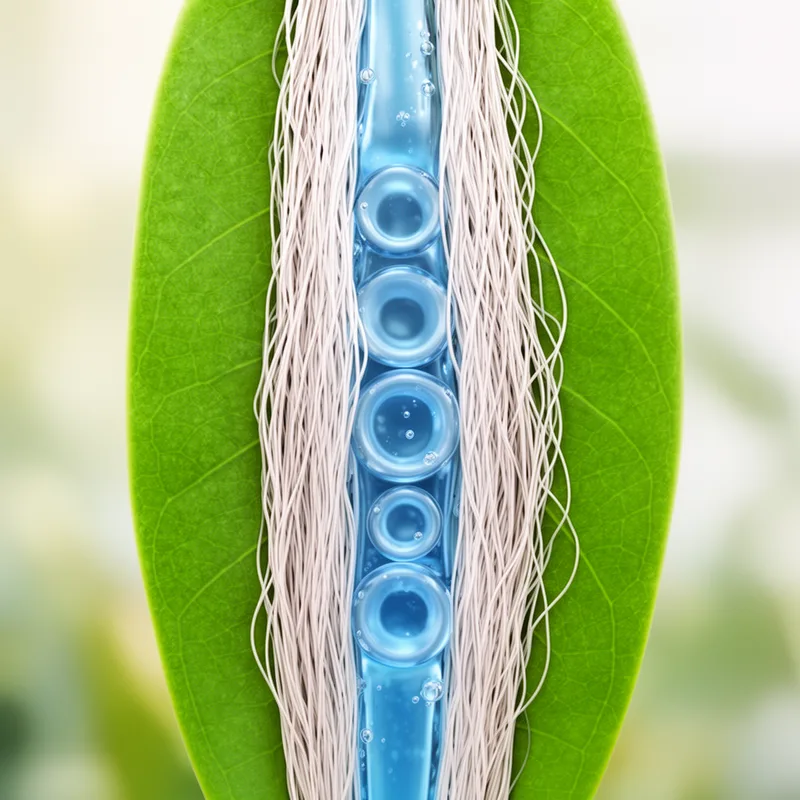
A group of tubes in stems and leaves that carry water and food and give support
Surface Forms
Morphology
Etymology
Fibrovascular comes from two parts: fibro- from a word for 'fiber', seen in English as fiber, and vascular meaning 'vessel', a tube that carries water or blood. So, fibrovascular tissue has both strong fibers for support and vessels for transport, which is why it describes tissue made of fibrous and vascular parts.

