
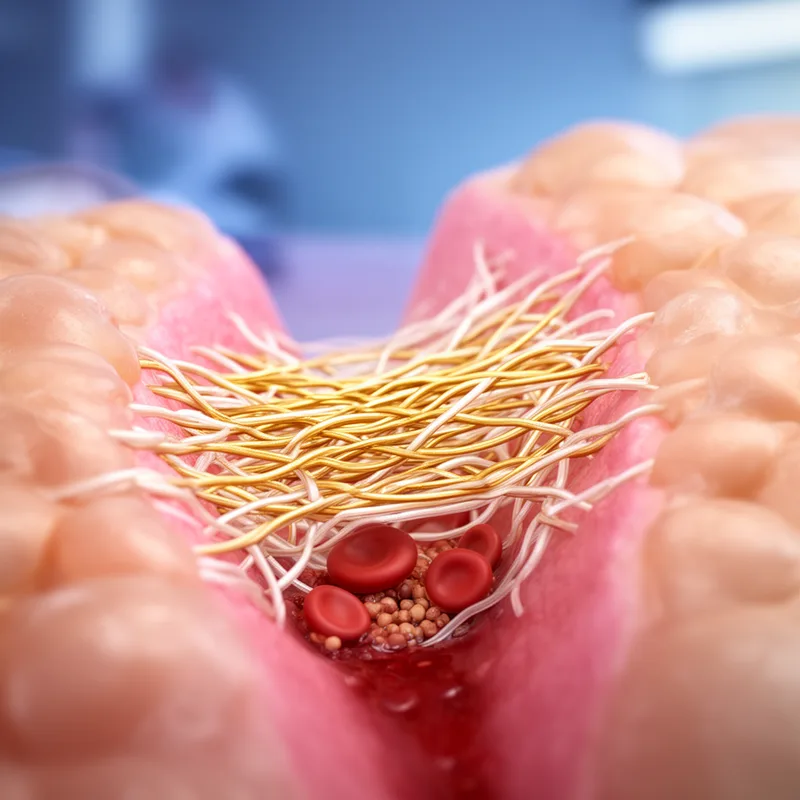
fibronectin


 1
9.1
- noun
- /ˌfaɪbroʊˈnɛktɪn/
- Specialized
- Considering the relative concentration as well as specific biological properties, albumin, fibrinogen, and fibronectin are the most probable proteins for adsorption on the surface of a biomaterial in contact with blood.
- fibronectin deposition
- fibronectin expression
- fibronectin-coated
Examples
-
Others believe that the corticosteroid-induced intraocular pressure elevation is related to an increase in the expression of collagen, elastin, or fibronectin in the extracellular matrix.
Academic text (1998) -
So, the surface properties of a biomaterial should be considered a critical parameter in the adsorption of fibronectin, followed by better proliferation and development of the cells.
Academic text (2018) -
Finally, S. aureus contains adhesins, which readily bind to laminin and fibronectin that are exposed in the "sticky" keratinocytes of patients with AD and skin injury.
Academic text (2007) -
A drop containing 10 mg/ml fibronectin was added to the surface of the activated gels, covered with Parafilm, and incubated for 2 h in a humidifier.
Academic text (2018) -
In addition, TGF-β2 treatment of cultured human TM cells induces cross-linking of fibronectin via induction of tissue transglutaminase.
Blog text (1) -
Multiple specific binding sites on the glycoprotein fibronectin induce the ability to interact with a wide range of other biomaterials via the formation of fibrils, i.e., fibrillar extracellular matrix.
Academic text (2018) -
Fibronectin helps wounds heal by allowing fibronectin to support cell adhesion during tissue repair.
-
Researchers study fibronectin to understand its role in cell adhesion and tissue regeneration.
-
The presence of fibronectin in the extracellular matrix promotes the attachment of cells in culture.
Synonyms
 1
7.7
A protein around cells that helps them stick together and hold tissues in place
Surface Forms
Morphology
fibronectin = fibro + nect + in
The word is a specialized biomedical formation from combining forms 'fibro-' + 'nect-' plus the protein suffix '-in'; the components are not standalone common English words and the meaning is technical, so learners cannot reliably derive the sense.
Etymology
Fibronectin begins with fibro- meaning 'fiber' and carries nect- meaning 'to bind', a sense you can see in the English word connect. So, fibronectin is a 'fiber' protein that 'binds' cells together and helps tissues heal.