
fibrinopeptide
- noun
- /faɪˌbrɪnəˈpɛptɪd/
- Specialized
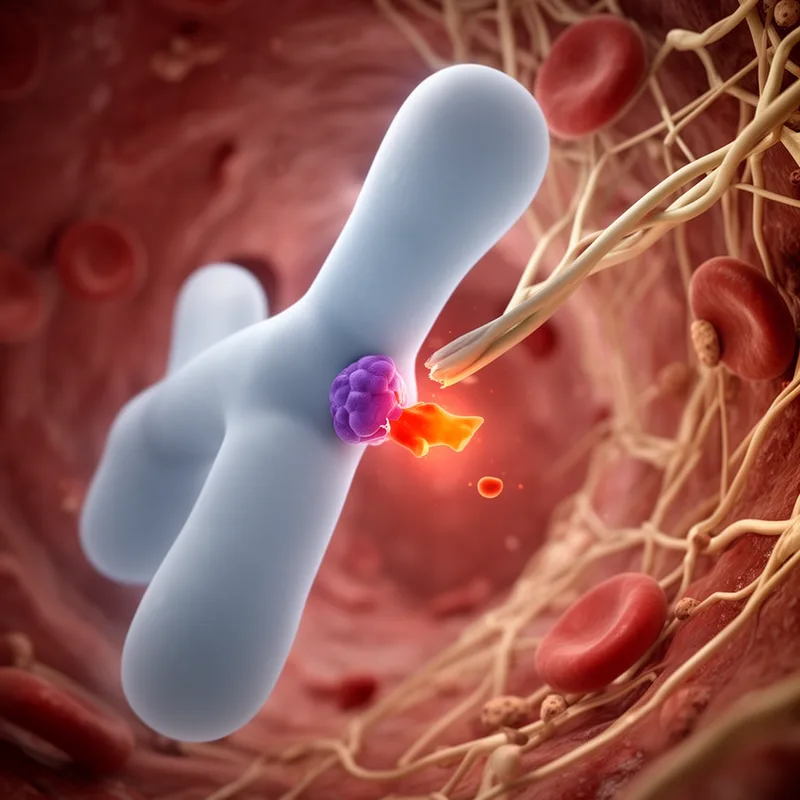
- During clot formation, fibrinopeptide is released from fibrinogen by the enzyme thrombin.
Examples
-
The measurement of fibrinopeptide levels can help assess the activity of blood clotting.
-
Researchers detected elevated fibrinopeptide concentrations in patients with thrombosis.
-
The fibrinopeptide plays a crucial role in blood coagulation.
-
Researchers are studying the effects of fibrinopeptides on healing.
-
During clot formation, fibrinopeptide is released from fibrinogen by the enzyme thrombin.
-
Researchers detected elevated fibrinopeptide concentrations in patients with thrombosis.
-
The measurement of fibrinopeptide levels can help assess the activity of blood clotting.
Surface Forms
Morphology
Etymology
The word fibrinopeptide joins fibrin (from a Latin word for 'fiber') and peptide ('small protein'). So a fibrinopeptide is a small protein piece related to fibrin, which is why it is released when blood forms a clot.

