
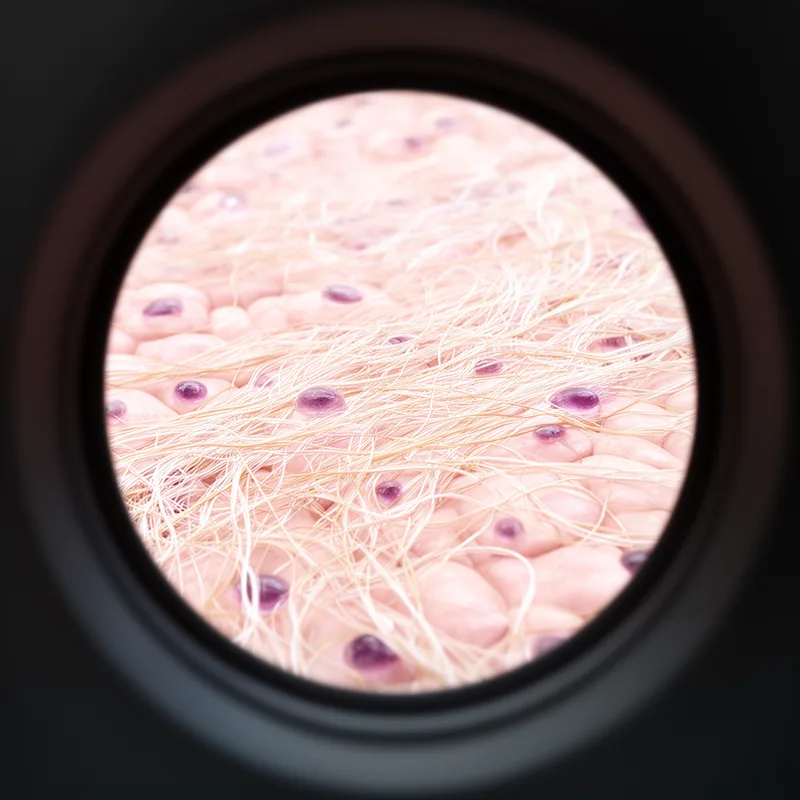
fibrillary
- adjective
- /ˈfaɪbrəˌlɛri/
- Specialized
- Immunostains with glial fibrillary acidic protein, melanoma market, epithelial membrane antigen, and carcinoembryonic antigen were negative.
- glial fibrillary
- fibrillary acidic
- fibrillary acidic protein
Examples
-
The same cells were negative for glial fibrillary acidic protein, high-molecular-weight keratin, and muscle-specific actin and desmin.
Academic text (2005) -
The cells also expressed glial fibrillary acidic protein (GFAP); although GFAP is often positive in low-grade lesions, it is usually lost in high-grade neoplasms.
Academic text (2006) -
Immunostaining was performed with glial fibrillary acidic protein, neurofilament protein, S-100, and the proliferation index MIB-1 (Ki-67).
Academic text (2004) -
The study examined the role of glial fibrillary acidic protein in the development of brain tumors.
-
Researchers found that the presence of fibrillary structures in the tissue sample indicated potential underlying disease.
-
High levels of fibrillary proteins were detected in the biopsies, suggesting inflammation in the affected area.
Synonyms

 6
5.7
6
5.7

Made of many long thin threads like those in rope
 1
8.2
1
8.2
Thin and long like a thread or hair


 1
7.9
1
7.9
Thin and like a thread
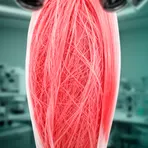
Having many tiny threads in body tissue

A surface that has many thin hairs or threads
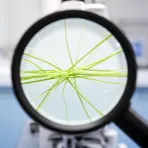
Thin and long like a thread

Made of thin threads like hair

A very thin shape like a thread
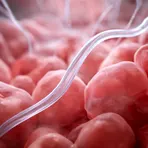
Shaped like a thin thread in parts of living things

Thin threads in an eyepiece that help measure
Surface Forms
Morphology
Etymology
Fibrillary comes from the root fibr- meaning 'fiber' or 'thread'. So fibrillary tissue is tissue that looks like or is made of many tiny threads, which is why doctors and scientists use the word for fibrous patterns in cells.