
feudalism
 4
7.9
4
7.9

- noun
- /ˈfjuːdəlɪzəm/
- The days of feudalism are over and done with; the era of progress and independent thought is at hand.
- feudalism versus capitalism
- transition from feudalism
- slavery to feudalism
Loading YouTube…
Watch on YouTubeSo Mark is talking about what made capitalism different from feudalism and why capitalism.
- So Mark is talking about what made capitalism different from feudalism and why capitalism.
- It had produced greater wealth and greater opportunity than feudalism had.
- Except in England, where we didn't really have feudalism and serfdom, what we had was, well, English Yeoman.
- In other words, there were there were efforts unconscious, not self aware, to go out of feudalism to a new system.
Examples
-
The theory should predict that feudalism fell because the serfs had enough.
-
The point is, in the olden days, like say under feudalism, I would know the guy in the village who made these sausages.
-
We do not have to accept capitalism any more than we had to accept feudalism.
Blog text (13) -
The disintegration of feudalism ushered in the advent of smallholder farming.
Academic text (1998) -
The stages of human experience evolve from primitive communism to feudalism, to capitalism, to socialism, and finally, to communism.
Academic text (1996) -
China then abolished feudalism and serfdom and instituted communes in agricultural and pastoral areas.
Academic text (1998) -
By the end of the 14th century, feudalism was no longer a force in most of Europe.
-
But there was indeed a solid substructure of feudalism in the American colonies.
-
The disintegration of feudalism ushered in the advent of smallholder farming.
Synonyms
 1
7.8
1
7.8
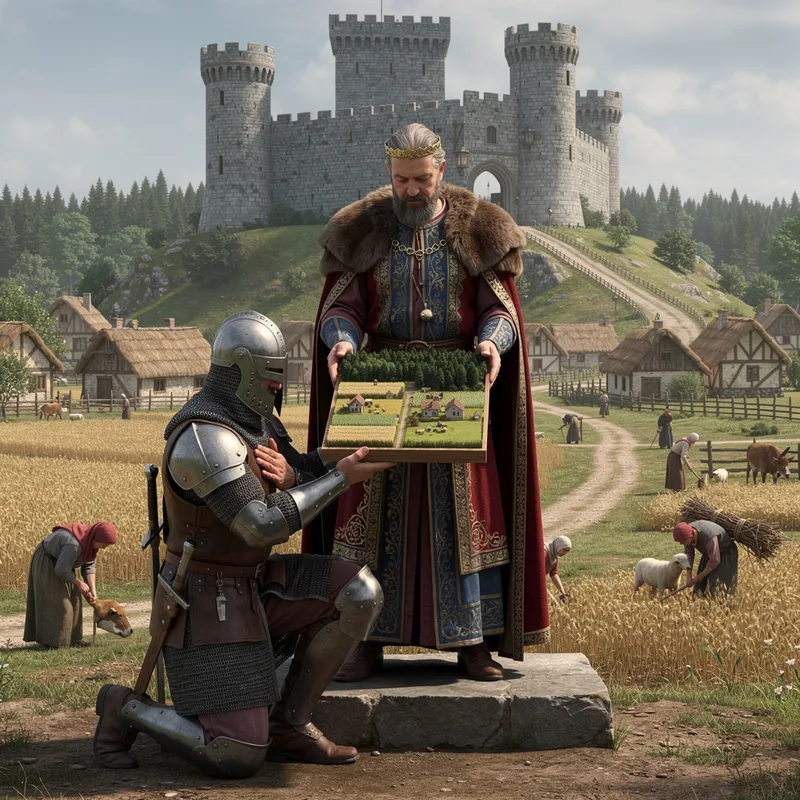
A way of organizing society in the Middle Ages where lords give land and protection to knights who serve them
Surface Forms
Morphology
Etymology
Feudalism comes from a medieval word fief, also written feodum, that meant 'land given for service'. In the Middle Ages a lord gave a vassal land in return for loyalty and military help, so feudalism describes this land-for-service social system.