

fenestra vestibuli
- noun
- /fəˈnɛstrə vɛsˈtɪbjuːlaɪ/
- Specialized
- The base of the stapes footplate fits snugly into the fenestra vestibuli.
Examples
-
The fenestra vestibuli plays a crucial role in transmitting sound vibrations to the inner ear.
-
Damage to the fenestra vestibuli can lead to hearing loss or balance problems.
-
The fenestra vestibuli plays a crucial role in hearing.
-
Damage to the fenestra vestibuli can lead to hearing loss.
-
The fenestra vestibuli connects the middle ear to the inner ear, allowing sound waves to pass through.
-
When sound reaches the fenestra vestibuli, it vibrates, transmitting the sound signals to the cochlea.
-
In a healthy ear, the fenestra vestibuli effectively helps in the conduction of sound from the tympanic membrane.
Synonyms
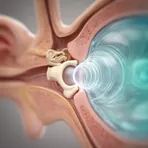
A small membrane-covered opening in the middle ear that passes vibrations from the ear bone to the inner ear
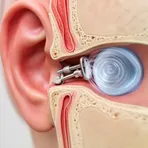
An oval opening in the middle ear where a small bone sends sound to the inner ear
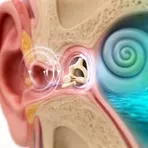
A small opening in the inner ear wall connected to a tiny middle ear bone that lets sound waves enter
Surface Forms
Morphology
fenestra + vestibuli
This is a technical Latin anatomical name: although 'fenestra' can mean 'opening', 'vestibuli' is a non‑dictionary/inflexed Latin form (genitive of vestibule) and is not a familiar English word to B1 learners. The specific anatomical referent ('oval window' of the ear) and the Latin construction are not derivable from the surface parts by an average B1 learner, so the expression is opaque.
Etymology
Fenestra vestibuli comes from Latin and literally means the 'window'—fenestra—of the 'vestibule'—vestibuli. It is the small oval opening in the inner wall of the middle ear where the stapes bone fits and sends sound into the inner ear, so the name gives a simple picture: a tiny 'window' that sound passes through.

