
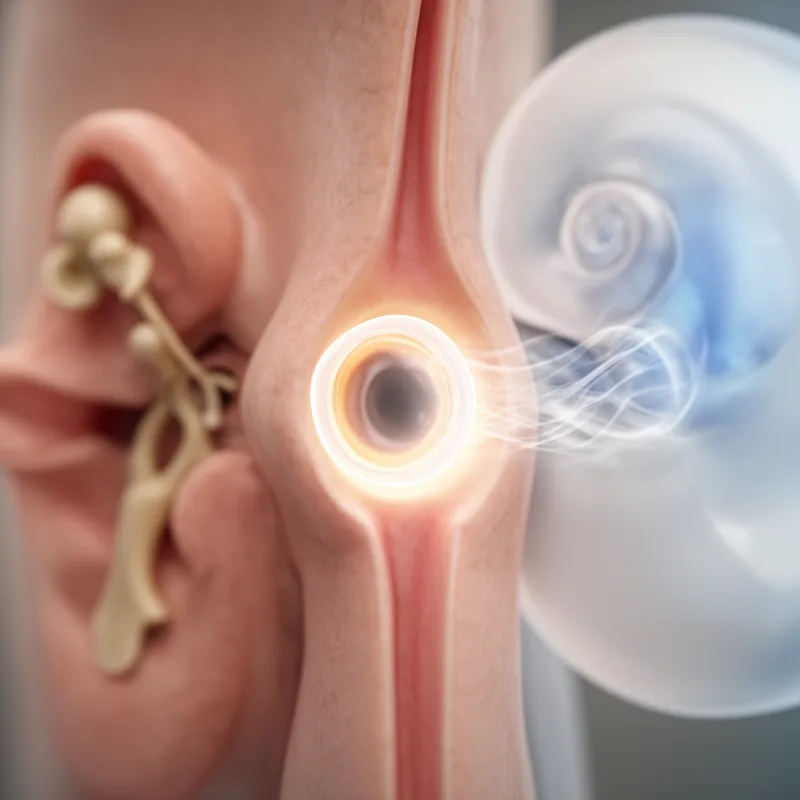
fenestra rotunda
- noun
- Specialized
- Sound vibrations are transmitted into the cochlea through the fenestra rotunda.
Examples
-
The surgeon inspected the fenestra rotunda before proceeding with the cochlear implant.
-
Can you locate the fenestra rotunda in the diagram?
-
Damage to the fenestra rotunda can affect a person's sense of hearing.
-
The fenestra rotunda is crucial for hearing.
-
Sound vibrations enter the cochlea through the fenestra rotunda, which plays a vital role in hearing.
-
During the operation, the doctor carefully examined the fenestra rotunda to ensure it was functioning properly.
-
An issue with the fenestra rotunda can lead to significant hearing loss in patients.
Synonyms


 1
7.6
1
7.6
A small opening in the inner ear wall that leads to the part that senses sound
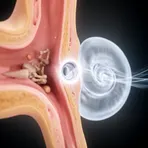
A small round opening in the inner ear that joins the middle ear to the cochlea

A small opening that leads into the cochlea, the snail-shaped part of the inner ear
Surface Forms
Morphology
fenestra + rotunda
The composition is literally noun + adjective: 'fenestra' = opening and 'rotunda' (Latin/derived) = round, so a learner who knows both constituents can infer it denotes a round opening. However, the specific anatomical sense ('the round window in the middle ear leading to the cochlea') is technical and not fully predictable from the parts alone, so the transparency is only partial.
Etymology
Fenestra rotunda comes from Latin words fenestra ('window') and rotunda ('round'), giving the clear image of a small round 'window' in the wall of the middle ear. That's why the term now means a small round opening that leads into the cochlea, the spiral part of the inner ear that helps us hear sound.