
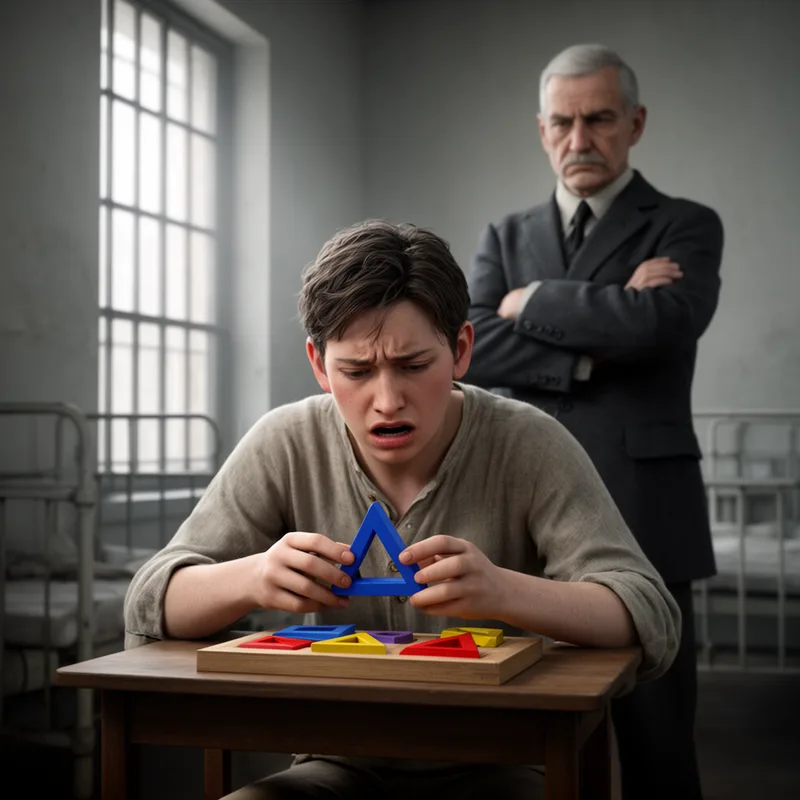
feeblemindedness


 1
9.9
- noun
- /ˈfiːbəlˌmaɪndədnəs/
- Slur
- Psychologists who believed that males varied more than females justified their belief by using the dubious observation that men excelled in scientific and professional endeavors, and men also accounted for the majority of people institutionalized for feeblemindedness.
Examples
-
In the early 20th century, feeblemindedness was often used to justify controversial sterilization laws.
-
In 1903, the American Breeders' Association formed to promote wide-scale selective breeding and eliminate such degenerate traits as feeblemindedness, promiscuity, criminality, insanity, and poverty.
Academic text (2014) -
Second, that most feeblemindedness is inherited, and Carrie Buck surely belonged with this majority.
Academic text (2002) -
To this day, one discovers people convinced of the truth of the old Victorian canard that masturbation leads to feeblemindedness.
Fiction book (2001) -
Some states additionally passed legislation restricting the ability of people with feeblemindedness and other disabilities to marry, and many early supporters of birth control also touted this as a method of eugenic control (Sanger, 1922).
Academic text (2011) -
Historically, feeblemindedness was thought to be hereditary, leading to significant social stigma.
-
Many people with feeblemindedness faced discrimination and were often institutionalized in the past.
Synonyms
 3
6.2
A state of not understanding things quickly
 1
8.4
Lower than usual ability to think and learn
 1
7.9
A lack of cleverness or quick thinking
 1
8.2
Low mental ability to think clearly or learn
 1
7.7
A quality of being slow to understand and making simple mistakes
 1
8.1
A state when someone is slow to understand things

A condition of low ability to learn and think that starts in childhood
Antonyms

Surface Forms
Morphology
Etymology
Feeblemindedness comes from the parts feeble ('weak'), mind ('thinking'), and -ness ('state'). It literally means a 'state of weak mind', and it was once used to describe people with serious intellectual disability, but today the term is old-fashioned and hurtful.