

to fayed
- verb
- /feɪd/
- Archaic
- She fayed the pieces of wood so skillfully that the seam was almost invisible.
Examples
-
In the old workshop, the boards were fayed together without any visible gaps.
-
He fayed the edges to ensure a tight fit.
-
The craftsman carefully fayed the metal plates to ensure a tight seal.
-
The two pieces of wood were fayed perfectly.
-
The craftsman carefully fayed the metal plates to ensure a tight seal.
-
In the old workshop, the boards were fayed together without any visible gaps.
-
She fayed the pieces of wood so skillfully that the seam was almost invisible.
Synonyms

 3
3.6
3
3.6

To join pieces of cloth by sewing their edges together
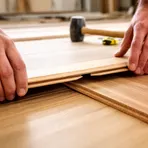
To join boards by fitting a thin edge into a matching groove
Surface Forms
Morphology
fayed = fay (opaque) = fay + ed
Although formed by the regular past-tense suffix '-ed' on 'fay', the base verb 'fay' is archaic and unknown to most learners, so they cannot reliably derive the meaning.
Etymology
Fayed comes from the old verb fay, which meant to 'join' or 'fit closely', especially in carpentry and metalwork. So when pieces are fayed they are fitted tightly together with no gaps.