
faunal


 1
7.0
1
7.0
- adjective
- /ˈfɔːnəl/
- Specialized
- Native plant and faunal biodiversity was better maintained on ranches and protected areas than on exurban developments.
- faunal remains
- faunal abundance
- faunal group
Examples
-
The rate and extent of this faunal collapse are greater in smaller reserves than in larger ones (Bierregaard and Lovejoy 1988).
Academic text (1992) -
Several independent studies have since confirmed that the same kind of faunal change that took place in South Africa also occurred in Ethiopia, Kenya, and Tanzania.
Academic text (1994) -
Most of the boxes, he explains, contain faunal remains from the middens. "These are useful
Academic text (2007) -
The finding prompted further fieldwork in the region to focus on salmon when searching for faunal remains.
Academic text (2011) -
Frequency distributions of study duration were plotted separately for each faunal group.
Academic text (2003) -
The tribe encourages collaboration with Western scientists for basic ecological research, botanical and faunal inventories, and the study and recording of Kuna traditions and culture.
Academic text (1996) -
In fact, fire is central to longleaf-pine habitat, facilitating faunal and floral succession and clearing out less biodiversity-supportive hardwoods.
Academic text (2008) -
Over six years of excavation, EPI produced more than 5,000 artifacts and floral and faunal specimens, as well as a great deal of information about the vessel's construction.
Academic text (2010) -
Last year, a refuse-filled cellar on the property once owned by the Bulters, an African American family, yielded nearly 1,000 faunal remains that show a dietary pattern called Upland South: lots of pig, chicken, and very little beef.
Academic text (2005) -
The researchers noted a significant increase in faunal populations following the conservation efforts in the region.
Surface Forms
Morphology
Etymology
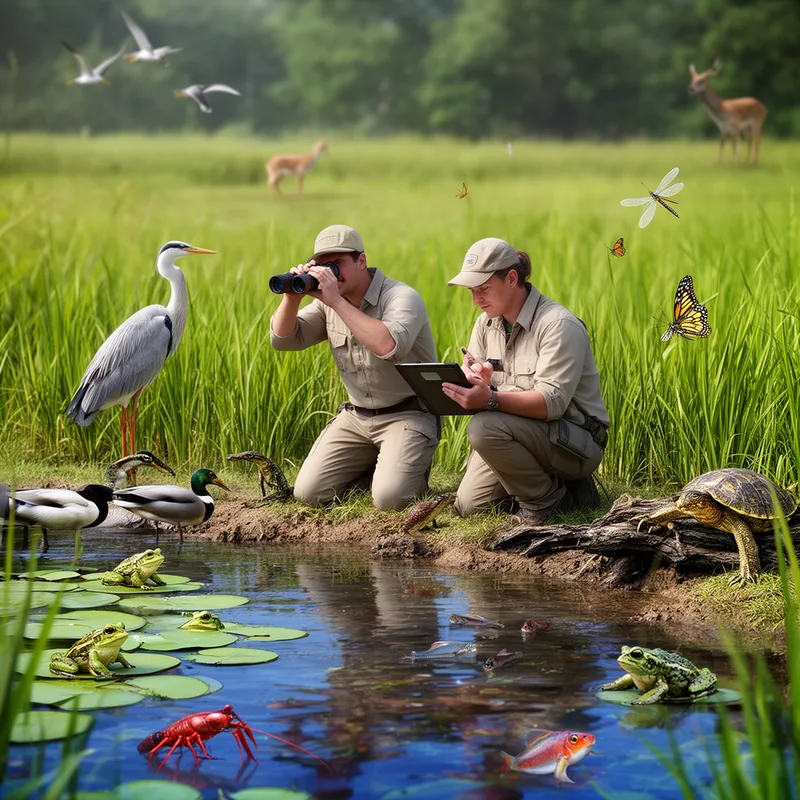
Faunal comes from the word fauna, a Latin word meaning 'animals' that you can see in the common phrase 'flora and fauna'. So faunal means 'of the animals', which is why a 'faunal survey' looks at the animals living in a place.