
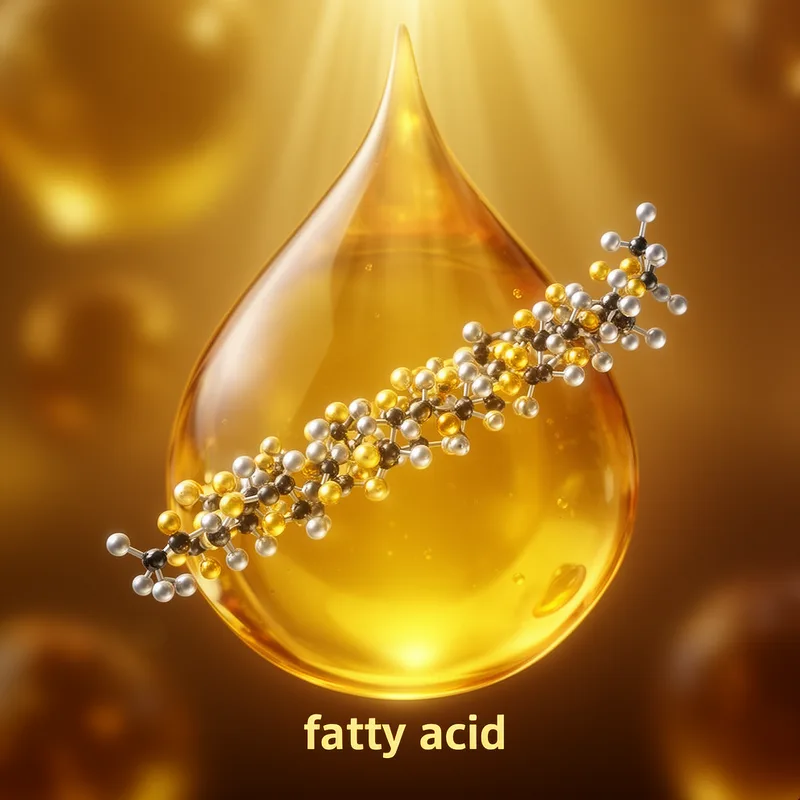
fatty acid
 30
3.3
30
3.3

- noun
- /ˈfæti ˈæsɪd/
- Specialized
- Fish lipids have received great attention over the last two decades because they are rich in fatty acids.
- polyunsaturated fatty acids
- unsaturated fatty acids
- saturated fatty acids
Loading YouTube…
Watch on YouTubeIt is primary site for fatty acid oxidation.
- It is primary site for fatty acid oxidation.
- Why increasing amino acid intake or fatty acid intake might decrease sugar craving.
- It was the loss of the specific bacteria that produce the short chain fatty acids.
- And that's because we can't convert from burning glucose sugar as a fuel to burning fatty acids as a fuel.
- In addition, the bacteria will chew that soluble fiber up into a compound called short chain fatty acids.
- And so with that, I dove into the biochemistry of the essential fatty acids, which are the polyunsaturated fatty acids.
- So you mentioned sugars, you mentioned fermentation, so presumably short and long chain fatty acids.
- And so when you do break that fast, you're going to eat nutrient dense, vitamin rich, mineral rich foods that are full of fatty acids and amino acids.
Examples
-
Pumpkin seed oil is rich in linoleic acid, an essential fatty acid.
Academic text (2015) -
Even with the right diet, you are not eliciting short chain fatty acids which are anti-inflammatory.
-
OK, so normally those free fatty acids come out of fat cells.
-
Are you getting enough fatty acids in your diet?
-
Increases in the amount of free fatty acid in plasma have been indicated.
Academic text (1997) -
It's got omega-3 fatty acids.
-
Palmitic acid is the most common fatty acid found in plants, microorganisms, and animals.
Academic text (2015) -
There are two main types of Omega-3 fatty acids: short chain and long-chain.
Blog text (9) -
The study includes their proximate, amino acid, and fatty acid compositions.
Academic text (2015) -
A balanced diet should include sufficient fatty acids to support overall health.
Surface Forms
Morphology
The compound meaning is directly derivable from 'fatty' (relating to fat) + 'acid' (a type of chemical): a B1 learner who knows both words can reasonably infer this refers to an acid associated with fats/oils. The formation is a regular, compositional noun phrase found cross-linguistically; while the precise chemical details (chain length, organic chemistry) are specialized, they do not prevent basic understanding of the term.
Etymology
Fatty acid gives a simple image: it is a long, greasy piece of fat, with fatty showing where it comes from and acid showing that one end behaves like a sour 'head'. So fatty acid means a small part that makes up fats, or 'part of fats'.