
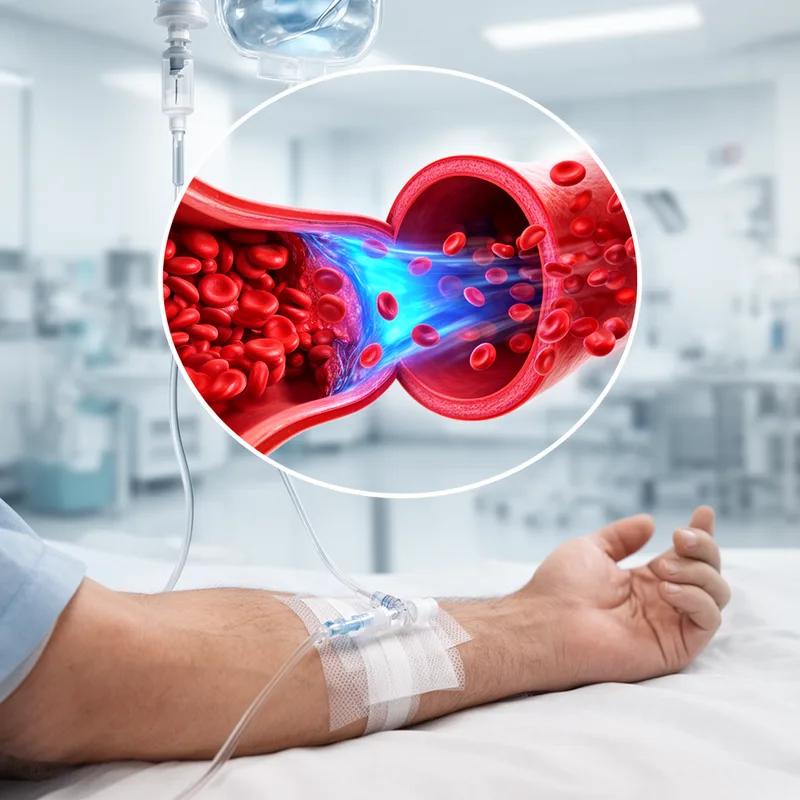
fasudil


 1
9.9
- noun
- Specialized
- Fasudil is principally used to treat cerebral vasospasm and improve brain microcirculation clinically.
- fasudil group
- effects of fasudil
- treatment with fasudil
Examples
-
Fasudil improved endothelial permeability and reduced lung inflammation, oxidative stress, and apoptosis, thereby reducing lung injury.
Academic text (2018) -
The present study provided a theoretical basis for the use of fasudil in the clinical treatment of sepsis.
Academic text (2018) -
Conversely, in the fasudil group, the general health of the rats was improved.
Academic text (2018) -
Based on these considerations, fasudil was administered 1 hour prior to CLP in the present study.
Academic text (2018) -
Updated results with the Fasudil-treated mice continue to be very promising.
Blog text (6) -
The present study aimed to investigate the pharmacological effects of fasudil on ALI in septic rats.
Academic text (2018) -
In summary, the present study demonstrated that treatment with fasudil had a protective effect on lung injury in septic rats. The mechanism may involve fasudil contributing to the inhibition of the activity of the Rho/ROCK signaling pathway in lung tissues.
Academic text (2018) -
The doctor prescribed fasudil to help improve blood flow for the patient's recovery.
-
In clinical trials, fasudil has shown promising results in reducing vascular complications.
-
Patients taking fasudil experienced better outcomes due to improved circulation and reduced symptoms.
Synonyms
 1
7.2
A drug that makes blood vessels wider to increase blood flow
 1
8.8
A medicine that widens blood vessels to increase blood flow
Surface Forms
Etymology
The word fasudil is a modern drug name, and a helpful way to remember it is the ending -dil, like the verb 'dilate', which means 'to widen'. That's why fasudil makes sense for a medicine that relaxes blood vessels and improves blood flow.