

to fasten your seat belt
 18
1.7
18
1.7

- phrasal verb
- As your captain, I advise you all to fasten your seat belts.
- Fasten your seat belt, please
- forget to fasten your seat belt
- told you to fasten your seat belt
Loading YouTube…
Watch on YouTubePatriots, gatriots and Natriots, fasten your seat belt because I Hit News is starting now with the news roundup.
- Patriots, gatriots and Natriots, fasten your seat belt because I Hit News is starting now with the news roundup.
Examples
-
Sit down and fasten your seat belts!
-
Please fasten your seat belts for takeoff.
-
I told her to fasten her seat belt.
-
I told you to fasten your seat belt.
-
Please fasten your seat belt.
-
Please, fasten your seat belt.
-
Might wanna fasten your seat belt, Jack...
Fiction book (2000) -
Everyone else... fasten your seat belts.
-
Passengers will please fasten their seat belts.
-
As your captain, I advise you all to fasten your seat belt for safety during the flight.
Synonyms
 88
1.6
88
1.6
To fasten a belt or strap with a clasp
 45
3.9
45
3.9
Fasten a seatbelt or get ready for a difficult, exciting time
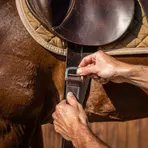 8
5.5
8
5.5
To fasten a strap tightly so it does not slip


 1
2.6
1
2.6
To fasten your seatbelt when you are in a car or plane
Surface Forms
Morphology
The instruction meaning is directly and transparently compositional from 'fasten' (to secure) + 'your' (possessive) + 'seat' + 'belt' (a strap for a seat); a learner who knows these words can infer the action. This is a literal, physical action in a common verb + object pattern and has clear cross-linguistic parallels, so it should be immediately understandable to a B1 learner.
Etymology
Fasten your seat belt comes from a simple, literal action: you fasten the belt to the seat so it holds you in place during sudden stops. That's why it means 'secure the belt' for 'safety' before a trip.