

to fast forward
 56
3.3
56
3.3

- phrasal verb
- /fæst ˈfɔrwərd/
- I want to fast-forward through the boring scenes in this video.
- fast forward ten years
Loading YouTube…
Watch on YouTubeI want to now Fast forward to my growth fund.
- I want to now Fast forward to my growth fund.
- So with the magic of video editing, let's Fast forward a couple hours.
- So now it's time to Fast forward and see how right they were.
- Fast forward, Fast forward to me moving to Dallas, TX.
- And and then move forward, Fast forward a few more years.
- You can scroll back, rewind, Fast forward, pause it.
- So we fast forwarded and thought, well, OK, let's at least see.
- So now let's Fast forward just three years later.
- OK, so let's Fast forward for a minute.
- Now let's kind of Fast forward to today.
- And Fast forward to the end of the weekend.
Examples
-
Let's fast-forward to the present.
-
Fast-forward to a briefing of the U.S. Commission on Civil Rights on February 8, 2008.
Academic text (2008) -
So now it's time to Fast forward and see how right they were.
-
I want to now Fast forward to my growth fund.
-
And let me Fast forward to the main function.
-
- Fast forward to the present day.
-
The beginning of the story played itself out before my eyes like a video on fast forward.
Fiction book (2000) -
Now, let's Fast forward seven years to where we are today.
-
So with the magic of video editing, let's Fast forward a couple hours.
-
Time to fast-forward to the present.
Antonyms
How Fast
56
3.3
 127
2.7
127
2.7
Surface Forms
Morphology
The meaning 'to advance quickly through recorded video or audio / skip ahead' is directly and transparently derived from combining 'fast' (quickly) with 'forward' (ahead in time), yielding a clear 'move ahead quickly' sense. This compositional pattern is common in English and other languages (e.g., equivalents in media controls), so a B1 learner who knows both words will readily infer the MWE meaning.
Etymology
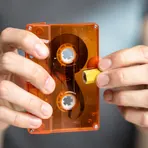
The phrasal verb fast forward comes from old tape and video players. When you pressed a forward button the tape moved fast to a later part, so the phrase now means 'to skip ahead' or 'move quickly to a later part'.