
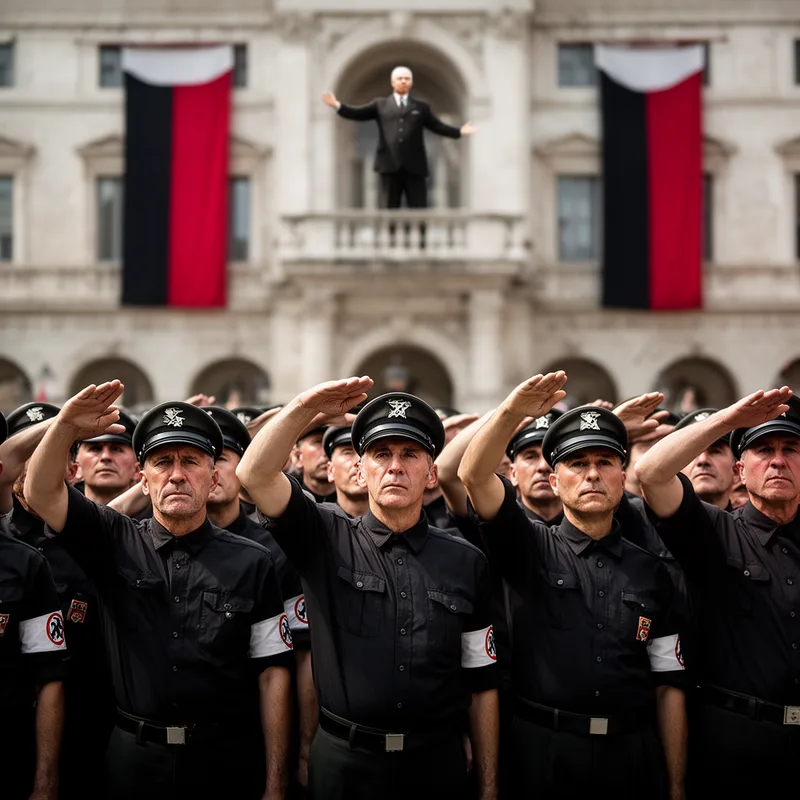
fascisti
- noun
- /fæˈʃisti/
- What the Fascisti accomplished, besides killing a few hundred people, was to create an atmosphere of lawlessness among those who remained.
Examples
-
"Warns of Fascisti as a Menace to the US," New York Times, 7 April 1924; Elizabeth Gurley Flynn papers, reels 4201, 4202.
Academic text (1997) -
The rise of the fascisti in the early 20th century led to significant political changes across Europe.
-
Then Copa's Fascisti come in.
-
They were stolen by the fascisti in the first place.
-
Over the next two decades, most of the sassi remained empty, even once the Fascisti were gone.
Fiction book (2002) -
Many people protested against the policies of the fascisti during the regime's rule in Italy.
-
Historians often debate the impact that the fascisti had on Italy's social and political landscape.
Synonyms

 74
7.7
74
7.7

A person who wants a strict, controlling government and who may use force against people who disagree


 1
9.9
1
9.9
A person who belonged to Mussolini's ruling party in Italy
Surface Forms
Etymology
Fascisti comes from Italian fascio, which means 'bundle', and from the old Roman symbol fasces, a bundle of rods that showed a leader's 'power'. A political movement chose this name to show 'unity' and strength, so fascisti are members or supporters of that movement.