
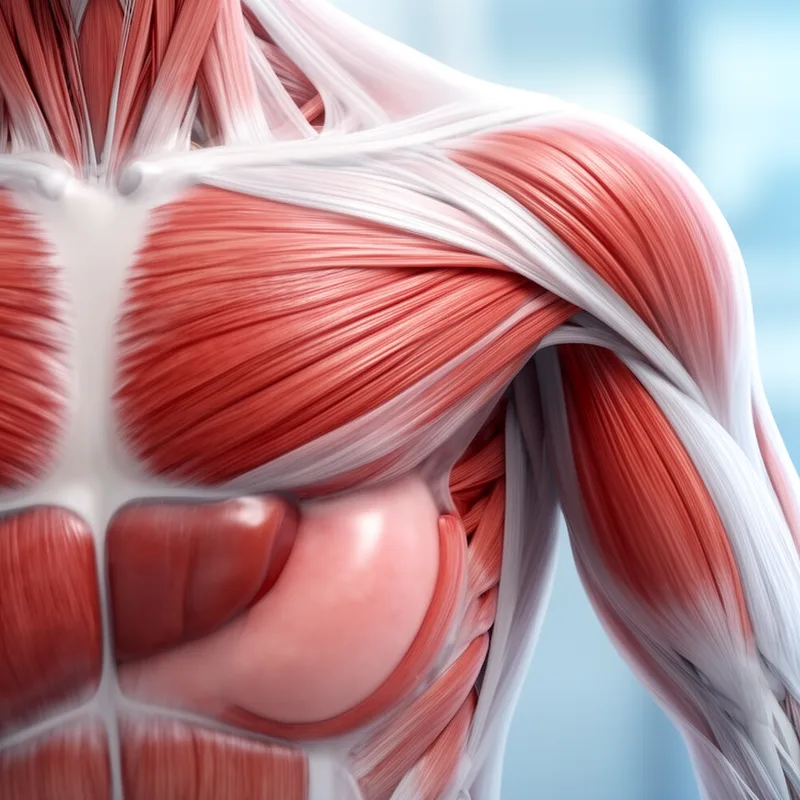
fascial
 1
8.4

- adjective
- /ˈfæʃəl/
- Specialized
- Delineation of major vessels, fascial planes, and bony or skull base involvement is important in determining the therapeutic approach.
- fascial closure
- fascial planes
- fascial flap
Loading YouTube…
Watch on YouTubeEvery muscle, the full fascial complex will be tightened up to take the slack out, to pull a bar from the ground.
- Every muscle, the full fascial complex will be tightened up to take the slack out, to pull a bar from the ground.
Examples
-
Compartment syndrome results from increased pressure (swelling) in a fascial compartment containing muscle.
Academic text (2006) -
There is sometimes a decrease in fascial compliance, prohibiting expansion of the muscle compartment.
Academic text (2004) -
Both the overlying fascial layer and skin are expanded.
Academic text (2014) -
Tender fascial tissue left of L7.
-
The thickness and degree of vascularity of the mastoid skin layer and fascial layer vary in each patient.
Academic text (2014) -
In the abdomen, the muscular and fascial structures are maximally preserved.
Academic text (2005) -
Infection often spreads to the mediastinum, the pleural cavities, and the pericardium through the fascial planes.
Academic text (2004) -
The surgeon explained how the fascial layers help support the muscles during movement.
-
Proper care of the fascial tissue is essential for rehabilitation after an injury.
-
Athletes often experience tightness in fascial connections that can limit their performance.
Surface Forms
Morphology
Etymology
Fascial comes from the Latin fascia, meaning 'band' or 'strip', and gives a clear image: fascial tissue is like a band or wrap that covers and holds muscles and organs together.