
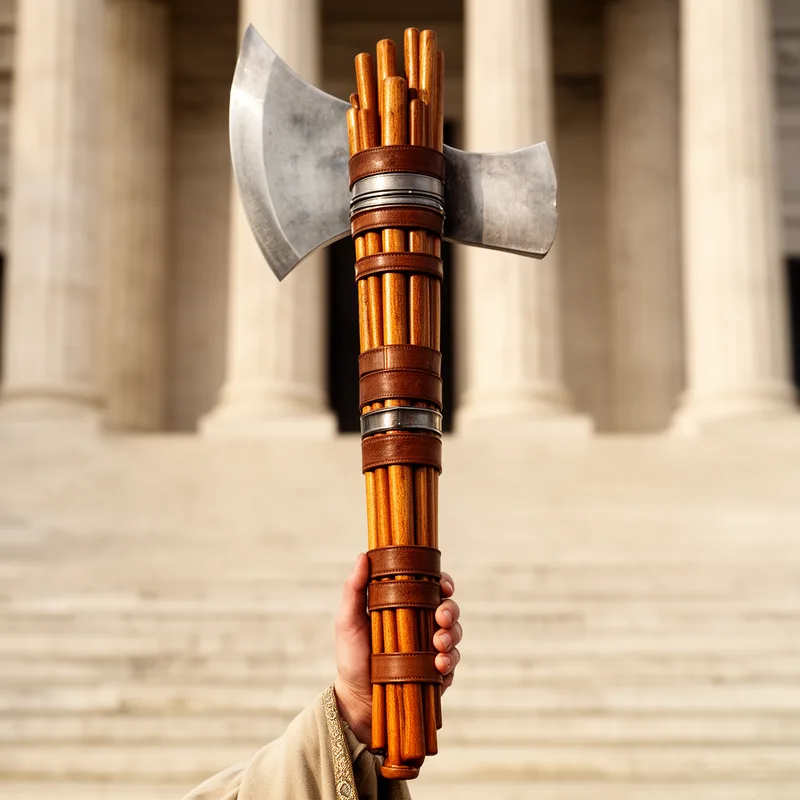
fasces


 1
9.9
- noun
- /ˈfæsiːz/
- The Roman consul was preceded by lictors bearing the fasces as a symbol of his authority.
Examples
-
The fasces became a prominent emblem of the Fascist Party in 20th-century Italy.
-
On some government buildings, you can see carvings of fasces to represent law and power.
-
The ancient Romans carried fasces to symbolize their authority.
-
In many sculptures, fasces represent the power of the state.
-
On some government buildings, you can see carvings of fasces to represent law and power.
-
The fasces became a prominent emblem of the Fascist Party in 20th-century Italy.
-
The Roman consul was preceded by lictors bearing the fasces as a symbol of his authority.
Surface Forms
Etymology
Fasces comes from the Latin fascis, meaning 'bundle', and it named the bundle of rods with an axe that Roman officials carried as a sign of power. A helpful image is that one stick can break but a bundle is strong, and the Italian word fascio ('bundle') later gave the name 'Fascism', so fasces became a symbol of authority and united strength.