
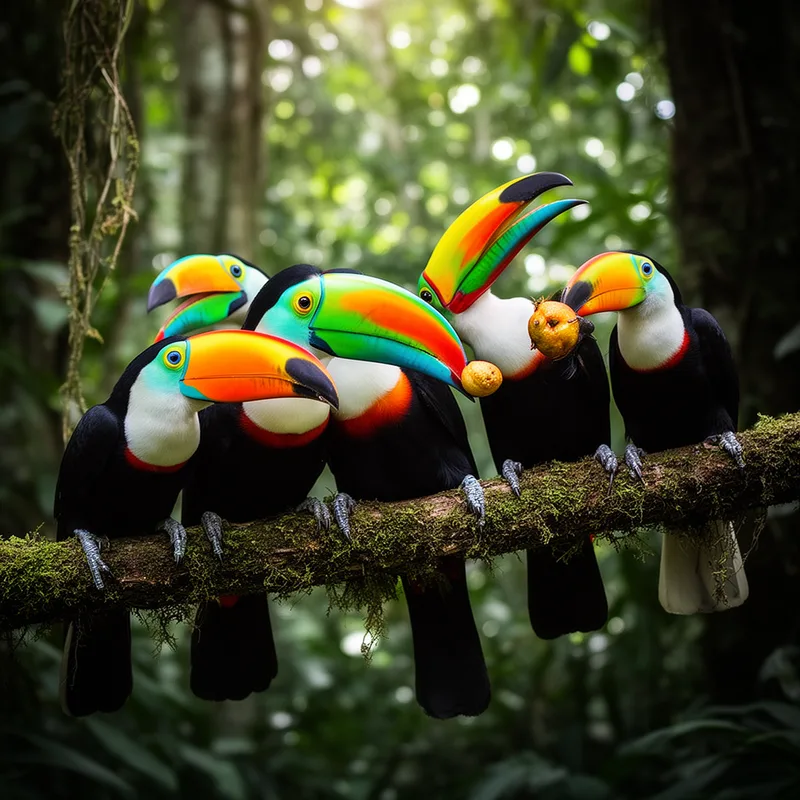
family Ramphastidae
- noun
- /ˈfæmɪli ræmˈfæs.tɪ.deɪ/
- Specialized
- The family Ramphastidae includes about forty species of toucans found across Central and South America.
Examples
-
The distinctive bills of the family Ramphastidae make them easily recognizable among tropical birds.
-
Scientists studied the diet of birds in the family Ramphastidae to understand their role in seed dispersal.
-
The family Ramphastidae includes many vibrant species.
-
Did you know that the family Ramphastidae has over 40 species?
-
The family Ramphastidae is famous for its colorful toucans that can be found in the rainforests of South America.
-
Birdwatchers love to observe the diverse species in the family Ramphastidae as they often display vibrant colors and unique bills.
-
In the family Ramphastidae, toucans play a vital role in their ecosystems by helping to disperse seeds throughout the forest.
Synonyms

A group of birds like toucans that live in tropical forests in Central and South America
Surface Forms
Morphology
The meaning is directly and compositionally derived from 'family' (a taxonomic grouping) plus 'Ramphastidae' (the name of a bird group); the phrase simply names the taxonomic family. This noun phrase follows a common, non-idiomatic scientific pattern found across languages, so a learner who knows both constituents will readily understand it.
Etymology
Family Ramphastidae may come from an old Greek word ramphastos meaning 'beak'. Because toucans in this family have very large, colorful bills, the name points to that main feature.

