
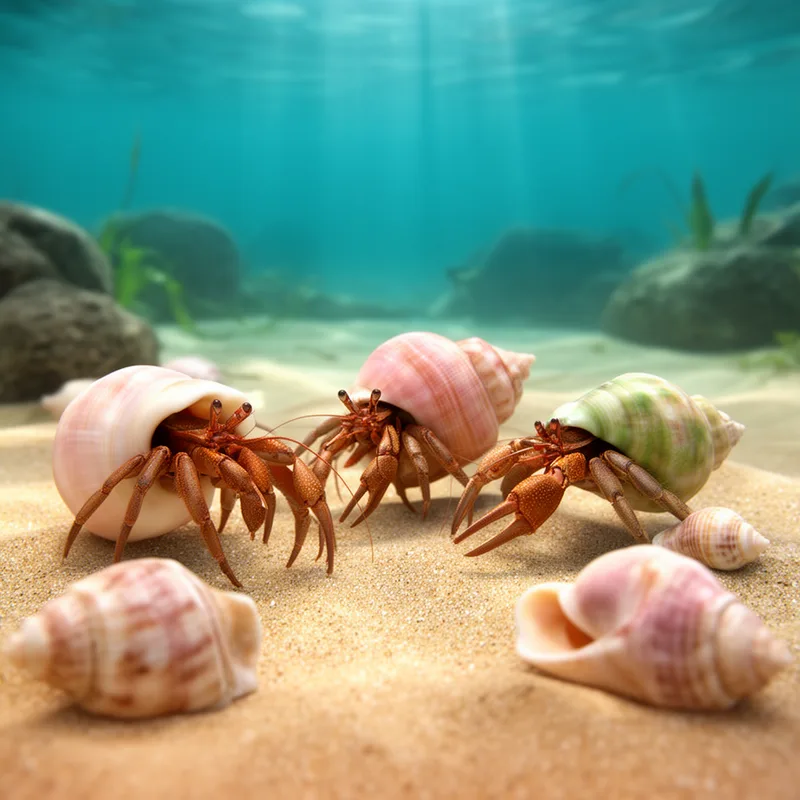
family Paguridae
- noun
- /ˈfæmɪli pəˈɡjʊrɪdeɪ/
- Specialized
- Many species within the family Paguridae use empty shells for protection against predators in marine environments.
Examples
-
The family Paguridae includes many species of hermit crabs.
-
Many species within the family Paguridae exhibit the behavior of using empty shells for protection.
-
Shell selection is a key research focus in evolutionary studies of the family Paguridae.
-
The family Paguridae is widely studied for its diverse adaptations to marine environments.
-
Did you know that the family Paguridae is diverse?
-
Research on the family Paguridae provides insights into the evolutionary adaptations of hermit crabs.
-
The family Paguridae consists of various hermit crab species that rely on vacant mollusc shells for shelter.
Synonyms
A group of small hermit crabs that live in empty shells for protection
Surface Forms
Morphology
This noun phrase is compositionally transparent: 'family' denotes a taxonomic grouping and 'Paguridae' names the group of crustaceans, so a learner who knows both constituents can infer it means the taxonomic family containing those crustaceans. The same construction (family + taxon name) is common cross-linguistically and follows standard scientific naming patterns, making it immediately comprehensible.
Etymology
Family Paguridae comes from the crabs called 'hermit crabs' that carry and live in empty shells; picture a crab moving into a new shell, and that image helps you remember that this family means the group of shell‑using crabs.

