

family Miridae
- noun
- /ˈfæmɪli ˈmɪrɪdeɪ/
- Specialized
- The family Miridae includes over 10,000 species of plant-feeding insects.
Examples
-
The family Miridae includes many species of leaf bugs.
-
Many members of the family Miridae are important agricultural pests due to their feeding habits.
-
Scientists recently discovered a new species in the family Miridae in tropical rainforest regions.
-
Did you know that the family Miridae contains over 10,000 species?
-
The researchers studied several species from the family Miridae to better understand their feeding habits.
-
In the garden, we found various insects belonging to the family Miridae that were munching on the leaves.
-
Entomologists are particularly interested in the family Miridae due to its diversity and role in ecosystems.
Synonyms

A large group of small bugs called leaf bugs that feed on plant sap
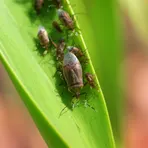
Small flat insects that feed on plants, called leaf bugs
Surface Forms
Morphology
The phrase is directly compositional: 'family' as a taxonomic grouping combined with 'Miridae' (the name of a group of insects) yields 'the taxonomic family of Miridae'. Taxonomic noun-noun constructions are cross-linguistically regular, so a B1 learner who knows both constituents can infer the meaning.
Etymology
Family Miridae comes from an old genus name Miris, which may come from a Latin word meaning 'wonderful' or 'strange'. Because scientists often name a whole family after one important genus, family Miridae became the name for a large group of 'leaf bugs' that feed on plants.

