
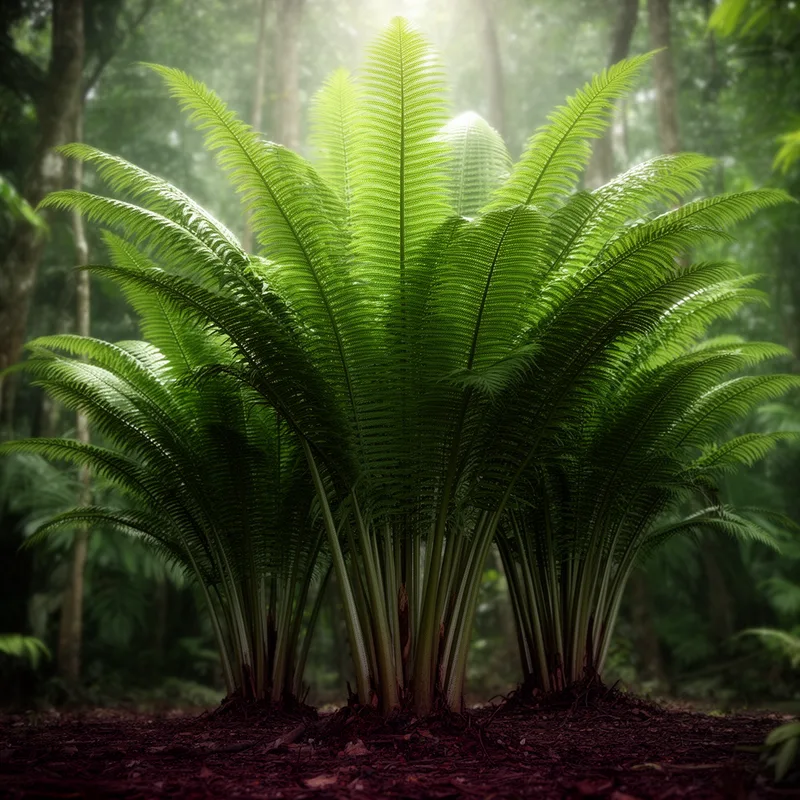
family Marattiaceae
- noun
- /ˈfæmɪli mɑːˈrætɪˌeɪsi/
- Specialized
- The family Marattiaceae includes some of the largest ferns in the world.
Examples
-
Many members of the family Marattiaceae have distinctive, thick stalks supporting their massive fronds.
-
Many species in the family Marattiaceae thrive in humid tropical climates.
-
Botanists have discovered new species within the family Marattiaceae in remote tropical forests.
-
The family Marattiaceae includes some of the largest and most ancient fern species known to science.
-
Botanists have discovered new species within the family Marattiaceae in remote tropical forests.
-
The family Marattiaceae includes some of the largest and most ancient fern species known to science.
-
Many species in the family Marattiaceae thrive in humid tropical climates.
Synonyms
A group of mainly tropical ferns with very large leaves that grow in warm, wet places
Surface Forms
Morphology
The phrase is fully compositional: 'family' denotes a taxonomic grouping and 'Marattiaceae' is the name of that family of ferns, so the meaning is simply the taxonomic family called Marattiaceae. This scientific naming pattern is standard in English and in many languages, making the phrase immediately understandable to a learner who knows both constituent words.
Etymology
The noun family Marattiaceae names a family, a 'group' of very large, ancient tropical ferns with thick stalks and huge leaves. Imagine a small group of fern 'giants' standing together in the forest; that picture helps you remember that the name means a group of these big, old ferns.

