
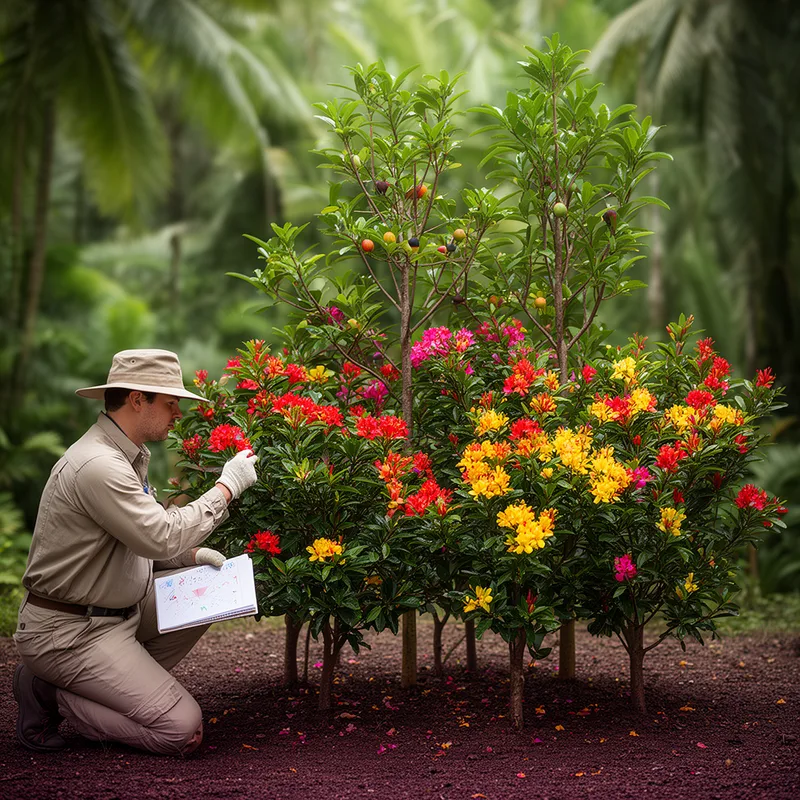
family Malpighiaceae
- noun
- /ˈfæmɪli mælˈpɪɡiˌeɪsi/
- Specialized
- The family Malpighiaceae includes many tropical plants.
Examples
-
Many species from the family Malpighiaceae are native to South America.
-
The family Malpighiaceae contains over 75 genera and is native mostly to tropical regions.
-
Botanists have discovered new flowering plants in the family Malpighiaceae in South America.
-
Several species within the family Malpighiaceae are known for their medicinal properties.
-
Several species within the family Malpighiaceae are known for their medicinal properties.
-
Botanists have discovered new flowering plants in the family Malpighiaceae in South America.
-
The family Malpighiaceae contains over 75 genera and is native mostly to tropical regions.
Synonyms


 1
9.9
A family of tropical shrubs and trees often grown for bright flowers
Surface Forms
Morphology
The phrase is a straightforward taxonomic composition: 'family' (a scientific grouping) combined with the proper name 'Malpighiaceae', so its meaning — the biological family called Malpighiaceae — is directly derivable from the parts. This naming pattern is cross-linguistically common, so a B1 learner who knows both constituents will understand it refers to a particular family of plants even if they lack detailed botanical knowledge.
Etymology
The plant name family Malpighiaceae comes from the last name of the Italian scientist Marcello Malpighi, who long ago studied plants and small parts of living things with an early microscope. So the name simply groups these similar tropical shrubs and trees and honors him, which is why botanists call the group 'Malpighiaceae' today.