
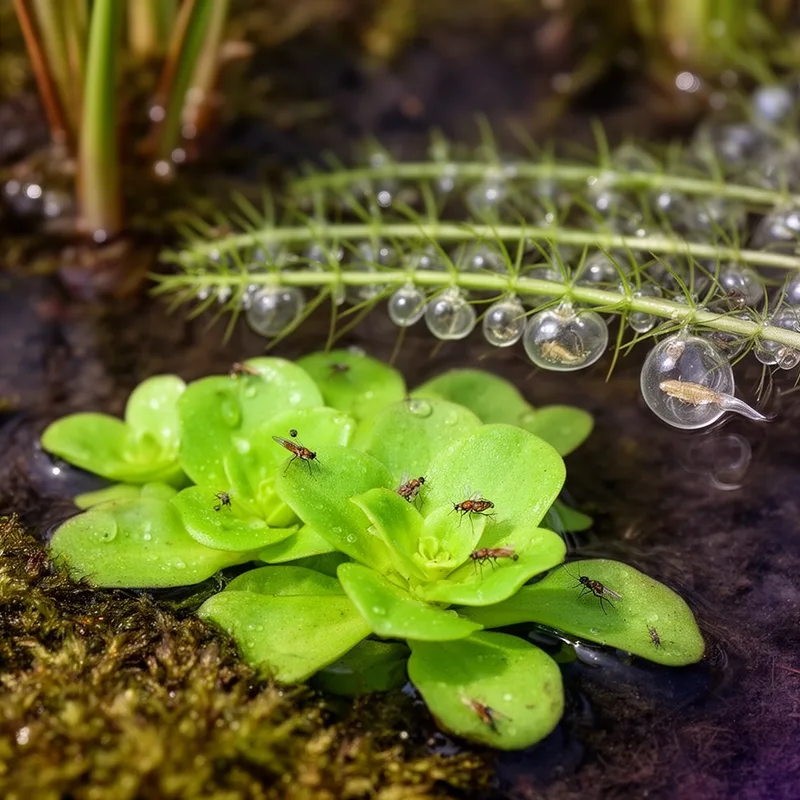
family Lentibulariaceae
- noun
- /ˈfæmɪli ˌlɛntɪbjuˈlɛrɪˌeɪsi/
- Specialized
- The family Lentibulariaceae includes fascinating plants like butterworts and bladderworts.
Examples
-
Many species in the family Lentibulariaceae have evolved unique mechanisms for trapping small aquatic organisms.
-
Many species from the family Lentibulariaceae thrive in wet environments.
-
Botanists often study the family Lentibulariaceae for insights into plant carnivory.
-
The family Lentibulariaceae includes some fascinating carnivorous plants.
-
Many species in the family Lentibulariaceae have evolved unique mechanisms for trapping small aquatic organisms.
-
The family Lentibulariaceae includes fascinating plants like butterworts and bladderworts.
-
Botanists often study the family Lentibulariaceae for insights into plant carnivory.
Synonyms

A group of plants that live in water or wet ground and catch small animals

A group of plants that live in water or bogs and catch and eat small animals
Surface Forms
Morphology
This phrase is fully compositional: 'family' names a taxonomic grouping and 'Lentibulariaceae' is the proper name of that group, so the meaning (the taxonomic family Lentibulariaceae) follows directly from its parts. The construction 'family + [taxon name]' is a regular, cross-linguistic scientific pattern, so a B1 learner who knows both constituents would reliably infer the meaning.
Etymology
The noun family Lentibulariaceae is a scientific 'family name' for a group of carnivorous bog and water plants. Think of it as a last name for plants like bladderworts and butterworts that all 'belong' together because they use similar traps, so the name helps you remember they are related.

