
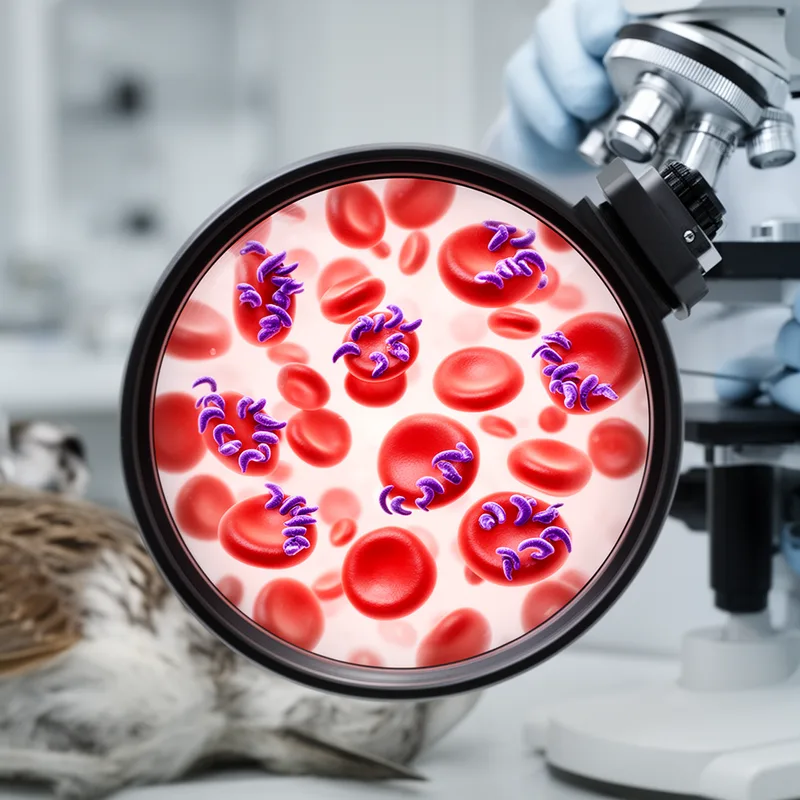
family Haemoproteidae
- noun
- Specialized
- Veterinarians often screen wild birds for parasites from the family Haemoproteidae.
Examples
-
The family Haemoproteidae includes various protozoan parasites.
-
Birds are often affected by the family Haemoproteidae parasites.
-
Species within the family Haemoproteidae are known to cause malaria-like infections in birds.
-
The family Haemoproteidae includes several genera known for their distinctive crescent-shaped parasites.
-
Species within the family Haemoproteidae are known to cause malaria-like infections in birds.
-
The family Haemoproteidae includes several genera known for their distinctive crescent-shaped parasites.
-
Veterinarians often screen wild birds for parasites from the family Haemoproteidae.
Synonyms
Tiny living things that live in birds' blood and cause disease
Surface Forms
Morphology
This is a straightforward taxonomic noun phrase composed of 'family' (a grouping) and the proper name 'Haemoproteidae' (the parasite family). If a learner knows both constituents, the meaning — a taxonomic family of parasites called Haemoproteidae — is directly derivable and non‑idiomatic, so it is transparent.
Etymology
Family Haemoproteidae comes from the parasite group name Haemoproteus. The part haemo- means 'blood' and the ending -idae marks a 'family', so the name points to tiny parasites that live in the blood of birds.

