
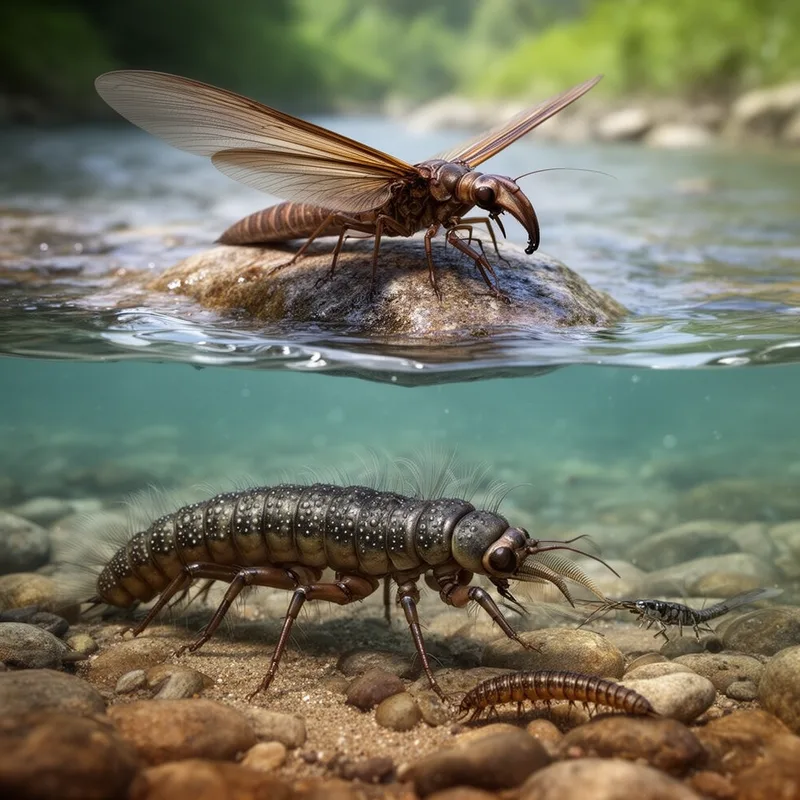
family Corydalidae
- noun
- /ˈfæmɪli ˌkɔːrɪˈdælɪdeɪ/
- Specialized
- The family Corydalidae includes some of the largest aquatic insects in North America.
Examples
-
Species in the family Corydalidae are important predators in stream ecosystems.
-
Entomologists often study larvae from the family Corydalidae to monitor freshwater quality.
-
The family Corydalidae includes various species of dobsonflies.
-
Many members of the family Corydalidae are found near freshwater.
-
Entomologists often study larvae from the family Corydalidae to monitor freshwater quality.
-
Species in the family Corydalidae are important predators in stream ecosystems.
-
The family Corydalidae includes some of the largest aquatic insects in North America.
Synonyms
A family of large water insects like dobsonflies that live near streams and rivers
Surface Forms
Morphology
The phrase is compositionally transparent: 'family' denotes a taxonomic grouping and 'Corydalidae' is the proper name of that group, so together they clearly mean the taxonomic family of those insects. This follows standard scientific naming patterns found across languages, making the meaning predictable for a learner who knows both constituents.
Etymology
Family Corydalidae gets its name from the genus Corydalus, and that strange word may come from an old Greek word for a crested bird, which gives a simple image of the insects' large, crest-like jaws. In science, a 'family' is a 'group of related species', so the name marks the group of large aquatic insects we call 'dobsonflies' and 'fishflies'.

