
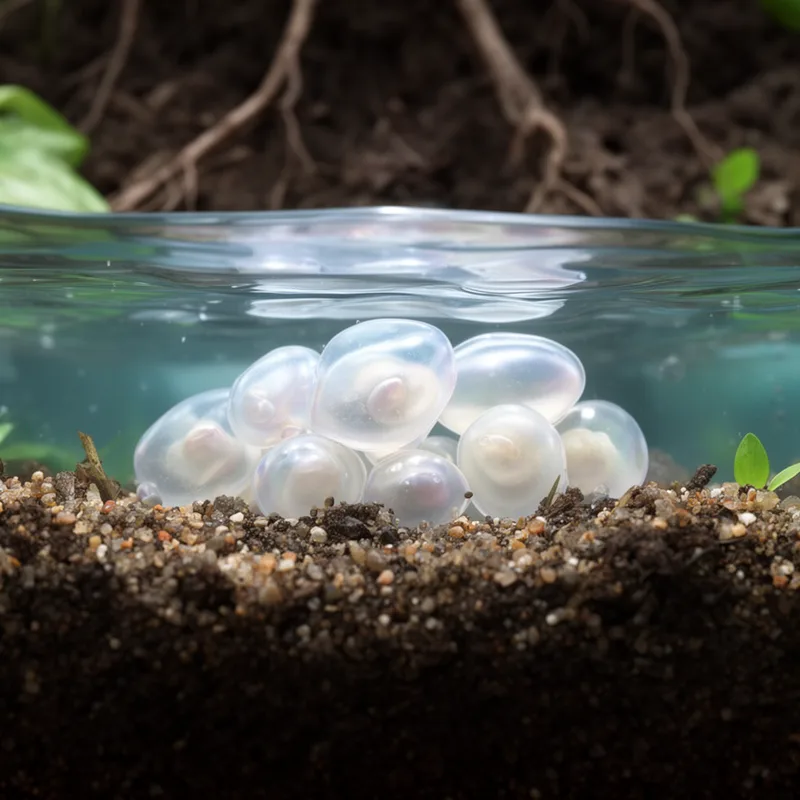
family Arcellidae
- noun
- Specialized
- Members of the family Arcellidae play an important role in ecological studies of soil and aquatic habitats.
Examples
-
The family Arcellidae includes many species of testate amoebae found in freshwater environments.
-
The family Arcellidae consists of various protozoa that thrive in both soil and aquatic environments.
-
Researchers discovered a new genus within the family Arcellidae during their survey of wetland microorganisms.
-
The family Arcellidae includes various species found in freshwater.
-
Many scientists study the family Arcellidae for ecological insights.
-
Many scientists study the family Arcellidae because of their significance in freshwater ecosystems.
-
In their research, experts analyzed the family Arcellidae to understand their impact on soil health.
Synonyms

A group of tiny one-celled animals that live in soil and fresh water worldwide
Surface Forms
Morphology
The phrase 'family Arcellidae' is a straightforward taxonomic noun phrase combining 'family' (a scientific grouping) with the taxon name 'Arcellidae'; if a learner knows both constituents they can directly infer it denotes that group of protozoa. This is compositional and follows standard cross-linguistic scientific naming conventions, so the meaning is immediately derivable from the parts.
Etymology
Family Arcellidae may come from the genus Arcella, whose tiny cells live inside a round 'shell' that looks like a small 'box' or 'bowl'. That's why the family name refers to a group of little, shelled protozoa found in soil and fresh water.

