

false sago
- noun
- Indian
- Unlike true sago palms, false sago is actually a cycad and not a palm at all.
Examples
-
The false sago is often grown as an ornamental plant due to its striking foliage.
-
Gardeners should note that false sago can be toxic if ingested.
-
The false sago is often mistaken for true sago palms.
-
Many gardeners love the false sagos for their unique appearance.
-
The false sago has beautiful, feathery leaves that add elegance to gardens.
-
Due to its hardy nature, the false sago can thrive in a variety of soil types.
-
Many people appreciate the false sago for its tropical look without the maintenance of a real palm.
Synonyms

A plant like a palm with stiff leaves and a thick trunk
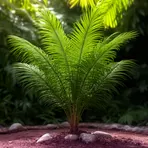
A tropical plant with palmlike leaves that look like a fern
Surface Forms
Morphology
false + sago
The adjective 'false' (imitation/not genuine) combined with the noun 'sago' straightforwardly yields 'not a true sago', i.e. a plant resembling sago but not a true sago palm. This simple adjective+noun compositional pattern is cross-linguistically common, so a B1 learner who knows both constituents would readily infer the intended meaning.
Etymology
False sago is named for the way it looks: the plant has leaves like a sago palm but is actually a different kind of plant. So the word 'false' tells gardeners it is 'not a true sago palm'.

